
5G Tests: A Success
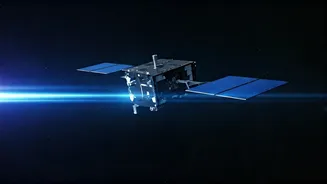
The LIDE satellite, operated by Tyvak International, has recently concluded its initial trials focused on 5G technology in the unique environment of space.
The purpose of these tests was to assess the satellite's capabilities in providing high-speed and reliable data transmission services from orbit. The accomplishment is pivotal as it demonstrates the practicality of 5G for space-based applications. These tests included evaluating key performance indicators such as data transfer speeds, latency, and overall network stability. Initial results suggest that the LIDE satellite fulfilled the testing objectives, providing an encouraging outlook for future applications in satellite communication. This successful deployment offers a pathway to support various applications, from enhanced Earth observation capabilities to improved communication systems for space missions and beyond. Further tests are planned to fine-tune the technology and prepare it for real-world scenarios.
Implications of 5G in Space
The successful 5G tests have wide-ranging implications for multiple sectors. Primarily, they set a precedent for faster and more efficient data transfer capabilities. This technology can revolutionize how data is transmitted and received from space, impacting fields such as Earth observation, weather forecasting, and disaster management. Additionally, the improved communication bandwidth could enable sophisticated scientific instruments and support complex space missions. For example, high-resolution imagery and real-time data from space-based sensors could become readily available. Moreover, the enhanced communication infrastructure could support the burgeoning commercial space industry. The advancements will improve the ability to monitor and manage satellites and space assets from Earth. The advent of 5G in space presents opportunities to unlock innovation and accelerate the development of new applications, thereby enriching our comprehension of both space and our planet.
Future Developments
Following the success of these preliminary 5G tests, Tyvak International is gearing up for further enhancements and applications. The organization has plans to continue refining the technology and exploring its potential in diverse contexts. Future development may involve integrating 5G with other cutting-edge technologies. These technologies may include artificial intelligence and edge computing, to create intelligent and autonomous space systems. In addition, there is a focus on extending the tests across multiple satellites. By extending the network's scope, the ability to improve the coverage and resilience of the space-based communication network is increased. The ultimate aim is to create a robust and globally accessible communication network. This network will ensure that the advantages of 5G technology extend across all of the world. Through these ongoing efforts, Tyvak International is committed to driving forward the space communication revolution. Their innovations promise to redefine the capabilities of space-based systems in the years ahead.