




Millet's Grand Revival
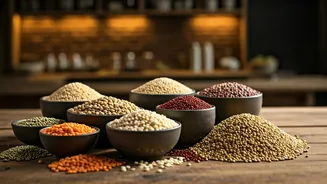
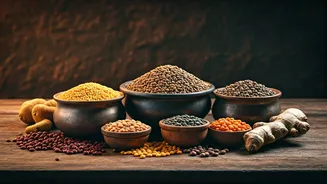
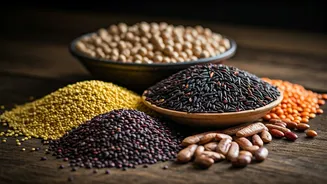
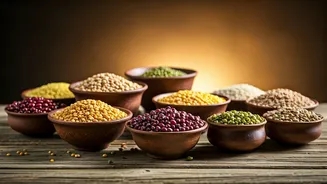
Long before millets were lauded as 'supergrains,' they were the everyday backbone of Indian households, forming the basis of meals like rotis and porridges.
Varieties such as bajra, jowar, and ragi provided sustained energy and satiety, a stark contrast to their eventual marginalization by refined grains. Today, these nutrient-dense ancient grains are experiencing a renaissance, lauded for their high fiber content, rich mineral profile, and beneficial impact on blood sugar regulation. This resurgence highlights a growing appreciation for balanced eating, positioning millets not just as an alternative, but as a superior, smarter grain choice rediscovered by a health-conscious generation seeking the wholesome nourishment our elders intuitively understood.
Jaggery's Sweet Comeback
Before the ubiquitous presence of refined sugar, jaggery reigned supreme as the preferred sweetener in countless Indian homes. It was a versatile ingredient, dissolved into warm milk, incorporated into decadent sweets, enjoyed post-meal, or used to imbue winter dishes with a comforting warmth. Now, jaggery has been re-introduced to the modern palate as a 'natural' alternative, appealing to those aiming to curb their intake of processed sugars. Its enduring appeal lies in its complex, earthy flavor profile and its deep cultural resonance, offering a sense of wholesome goodness that transcends mere nutritional value. This sweet, unrefined sugar has reclaimed its popularity by fulfilling a contemporary craving for sweetness that feels more authentic and deeply rooted in tradition.
Curd: The Daily Essential
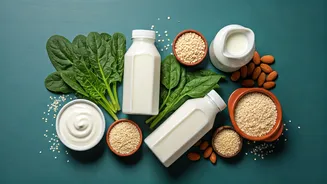
Curd, or dahi, was never a dietary fad in Indian kitchens; it was an ingrained daily practice, a constant presence on the dining table. Served alongside lunch, blended into cooling chaas, or mixed into rice, it was a familiar and effective staple. Grandparents relied on its goodness not for its trendiness, but for its inherent familiarity and digestive benefits. Today, curd is being recognized for its potent probiotic content, championed for its positive influence on gut health, bolstered immunity, and improved digestion. While the scientific validation may be more pronounced now, the practice itself remains unchanged, a testament to its enduring role as a simple, effective remedy for everything from heavy meals to digestive unease and the summer heat.
Makhana: From Simple Snack to Star
Makhana, or fox nuts, once occupied a humble niche in Indian culinary traditions, primarily consumed during fasting periods, lightly roasted with ghee, or served as a simple evening snack. In many households, it was a quiet staple, readily available without any fanfare. Children enjoyed its light crunch during tea time, while elders appreciated its digestibility. In recent years, makhana has undergone a remarkable transformation, repositioned as a premium snack. Marketed in sophisticated packaging and highlighted for its high protein, low-fat content, it's now a go-to for mindful eating. This evolution, from a basic household item to a gourmet treat, underscores makhana's inherent qualities: its lightness, adaptability, and satisfying nature, which have ensured its enduring appeal across generations.
Ghee: Nourishment Elevated
Ghee, clarified butter, was an integral part of traditional Indian cooking, generously used to enhance rotis, rice, dal, khichdi, and an array of sweets without a second thought. However, evolving dietary advisories led to a period of suspicion and caution surrounding its consumption. Now, ghee is making a strong comeback, embraced in moderation by individuals seeking both rich flavor and a sense of culinary heritage in their meals. For grandparents, ghee was never about indulgence in the modern sense; it represented pure nourishment, comfort, and vitality. The renewed enthusiasm for ghee mirrors a broader societal shift, valuing foods that offer both tangible health benefits and a comforting connection to tradition.
Fermented Foods' Ancient Wisdom
Long before the concept of a 'microbiome' entered mainstream discourse, Indian kitchens were adept at fermenting staples like idlis, dosas, dhokla, kanji, and various pickles. These preparations were born out of practicality, seasonality, and deeply ingrained domestic knowledge, rather than being designed as health products. Today, fermentation is hailed globally as a key trend for promoting digestive health and microbial diversity. In India, however, this practice has always been an organic part of daily culinary life. What appears novel to many is, in essence, a rediscovered ancient art, demonstrating how fermented foods seamlessly blend ancestral memory with modern scientific understanding.
Chutneys & Spices: Flavor and Function
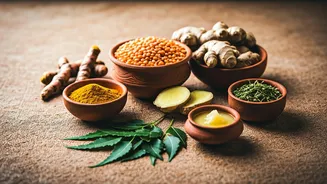
Grandparents viewed chutneys not as mere accompaniments, but as vital components that brought sharpness, freshness, and complexity to any meal. From tangy tomato to vibrant mint and nutty peanut varieties, they elevated simple dishes. Similarly, spices like ajwain, jeera, methi, turmeric, and black pepper were daily essentials, not just for taste but for digestive support. Contemporary food culture is now recognizing what Indian households have always known: flavor and function can coexist harmoniously. Chutneys and spices are being celebrated anew for their ability to transform ordinary meals into complete culinary experiences, reminding us that the most insightful cooking often originates from kitchens unconcerned with fleeting trends.