







Rapid Rise, Uneven Access
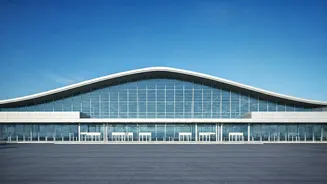
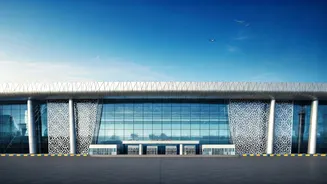
In a remarkably short span of four months since its inauguration, the Navi Mumbai International Airport (NMIA) has transformed into a significant aviation
centre for Mumbai. Initially handling just 23 daily flights, it has since surged to accommodate over 150 operations across nearly 45 destinations, facilitating the passage of more than a million passengers. Airlines are actively increasing their flight schedules, signalling strong demand. However, as this rapid expansion continues, the airport's primary hurdle is shifting from its physical infrastructure to a more familiar urban issue: travel time and accessibility. For many residents within the Mumbai Metropolitan Region, the practical usability of NMIA is increasingly defined not just by its distance, but by the predictability and duration of their journeys to the airport. While the Mumbai Trans Harbour Link (MTHL) has dramatically improved transit from South Mumbai, significant portions of the western suburbs still contend with lengthy and unpredictable road commutes, impacting the overall passenger experience.
The Access Divide Unveiled
A stark contrast in travel times highlights a significant accessibility challenge for the Navi Mumbai International Airport (NMIA). Passengers originating from areas like Colaba and Nariman Point can now reach the airport in a mere 20-40 minutes during off-peak periods, thanks to the efficient Mumbai Trans Harbour Link (MTHL). Conversely, commuters from farther western suburbs, such as Borivali, often face journeys spanning 90 minutes to over two hours. These extended travel times are largely attributed to navigating traffic congestion on major arteries including the Western Express Highway, the Jogeshwari-Vikhroli Link Road, and the Sion-Panvel corridor. The cost of taxi services on these routes can fluctuate significantly, ranging from Rs 900 to Rs 1,500, heavily influenced by traffic conditions. This disparity is already starting to influence travel choices. Locals in Vashi, Belapur, and Panvel increasingly prefer NMIA due to its shorter travel times, typically around 20-35 minutes. However, travellers from Bandra and the Bandra Kurla Complex (BKC) continue to experience reliability issues, particularly during peak evening hours, due to traffic bottlenecks at the Santacruz-Chembur Link Road, Chembur, and Govandi. Even travel from Thane, while generally more stable, can exceed 90 minutes during rush hours, underscoring the urgent need for improved transit options across the broader metropolitan area.
Bridging Multimodal Gaps
Currently, the Navi Mumbai International Airport (NMIA) relies heavily on road-based transportation. While key feeder routes like Palm Beach Road and the Sion-Panvel Highway assist in traffic flow, persistent congestion at Sion, Kurla, and Chembur remains a considerable obstacle. Public transport integration is still in its nascent stages; the Uran line of the suburban rail network offers limited utility due to last-mile connectivity issues and practical challenges associated with carrying luggage. In response to these evolving needs, NMIA offers various transit options, including app-based cabs, prepaid taxis, BEST Chalo buses, and Navi Mumbai Municipal Transport (NMMT) airport buses, alongside shuttle services for nearby areas. The airport is actively collaborating with governmental bodies to enhance multimodal connectivity and expand transport networks in step with increasing passenger volumes. Looking ahead, several significant infrastructure projects are poised to improve the situation. Metro Line 8 is projected to link NMIA directly with Chhatrapati Shivaji Maharaj International Airport, reducing inter-airport travel time to approximately 30 minutes. Additionally, the proposed Thane-Navi Mumbai elevated corridor and the Airoli-Katai tunnel are anticipated to alleviate pressure on existing road networks. Experts emphasize that the long-term success of NMIA is contingent on the timely operationalization of these crucial transport links.
Future Connectivity Vision
Industry analysts and mobility experts are closely observing the development of Navi Mumbai International Airport (NMIA), recognizing that its ultimate success as a major aviation hub is intrinsically linked to its accessibility. Aviation expert Lokesh Sharma notes that NMIA's rapid growth, escalating from 23 to over 150 daily flights within four months, clearly demonstrates the substantial air travel demand within the Mumbai Metropolitan Region. However, he stresses that a true airport hub is defined by its passengers' ability to reach it reliably and efficiently. AV Shenoy of the Mumbai Mobility Forum points out that persistent connectivity gaps could significantly diminish the airport's appeal for a considerable segment of Mumbai's travellers, even with the benefits offered by the MTHL. The potential delays in the crucial Metro link connecting Terminal 2 of the existing airport with NMIA are seen as a particular inconvenience for transit passengers. Furthermore, ongoing congestion on the primary approach roads continues to be a significant concern. Projections indicate NMIA will handle approximately 50,000 passengers daily, with around 380 flights per day by the end of FY27. While the airport has already begun to ease pressure on Mumbai's constrained aviation capacity, its next evolutionary phase will likely be determined less by how much its runways are utilized and more by its success in providing seamless and predictable travel for passengers across the entire city.