
Bonobos: Matriarchal Societies
Bonobos, often hailed as the closest relatives to humans along with chimpanzees, present a unique matriarchal society. Unlike their chimpanzee counterparts,
bonobo societies are primarily led by females. These female bonobos form strong bonds and alliances, allowing them to collectively dominate males, particularly through cooperation and social strategies. Their strength isn't just physical, but also stems from their ability to maintain social cohesion and use it to their advantage. Their social structure is remarkably peaceful, which is largely due to female dominance. These communities use frequent sexual interactions to reduce conflict, highlighting the complex social intelligence of these primates and the impact of the females.
Elephants: Experienced Leadership
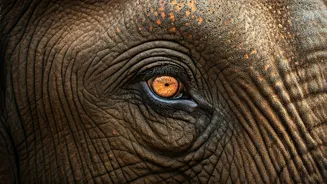
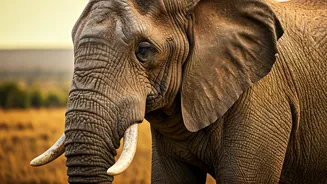
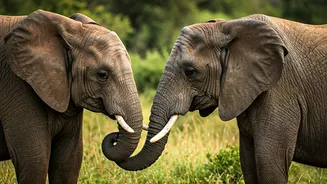
Within elephant herds, the matriarch—the oldest and most experienced female—guides the group. This position is earned over time, as the matriarch accumulates knowledge crucial for survival, such as where to find water and safe passage through difficult terrains. Her wisdom and decision-making are essential for the herd's well-being. Additionally, female elephants are physically formidable, possessing great size and strength, especially when protecting their young. They exhibit fierce protectiveness towards their offspring, working together to ward off predators or threats. These strong maternal bonds and the matriarch's guidance are key to the herd's endurance in various conditions, demonstrating the vital role of female elephants.
Spotted Hyenas: Dominant Females
Spotted hyenas are another example of females dominating. Female spotted hyenas are larger and more aggressive than their male counterparts. They possess higher levels of testosterone, which contributes to their physical prowess and their aggressive behavior. They lead the clan, which is often composed of complex social hierarchies. The status of female spotted hyenas is often determined at birth. Their elevated status allows them to have first access to food and resources. This social structure demonstrates the strength and leadership qualities inherent in female spotted hyenas. The dominance is reflected in all aspects of life.
Ants & Bees: Eusocial Triumph
In the eusocial world of ants and bees, the queen reigns supreme, holding the role of the primary reproducer. The queen's influence determines the colony’s existence. Her sole purpose is to lay eggs, which ensures the survival and expansion of her colony. Worker bees, who are also female, devote their lives to supporting the queen and tending to the colony. Their physical strength and labor contribute to the overall survival. Their coordinated efforts, guided by pheromones and social organization, build and maintain complex nests, collect food, and protect the colony from threats. This is a vivid illustration of female leadership.
Orb-Weaving Spiders: Predatory Superiority
Many species of orb-weaving spiders showcase a clear female dominance where females are larger and more powerful than males. This size difference is particularly noticeable, with females often several times larger. They are primarily responsible for building the intricate webs designed to catch prey. When the males mate with the females, they face the risk of being eaten after mating. The larger size and superior hunting skills are crucial for the female's survival and reproductive success. These females are masters of their domain, constructing traps and capturing food, proving their dominance in the spider world.
Green Anacondas: Gigantic Size
The green anaconda, one of the world's largest snakes, offers an example of sexual dimorphism, where females are significantly larger and heavier than males. This size advantage is crucial for reproductive success, allowing females to store more eggs. Their size also gives them an advantage in hunting. They are apex predators in their ecosystems. Female green anacondas can be up to three times the size of males. Their powerful bodies and ambush tactics allow them to dominate their environment, making them the superior sex.
Poison Dart Frogs: Maternal Care
While not always physically larger, female poison dart frogs play a crucial role in their species. They provide essential maternal care. After mating, the female ensures the survival of her eggs. She does this by laying the eggs in a secure location and often carries the tadpoles on her back to safe pools of water. Their direct involvement in raising the offspring ensures the survival of the next generation. The females’ careful attention to their young is a powerful demonstration of their parental dominance, ensuring the perpetuation of their species.
Birds of Prey: Hunting Skills
In many species of birds of prey, such as eagles, hawks, and owls, females are larger and more powerful than males, enabling them to hunt more effectively. Their superior size allows them to capture larger prey. Female birds also play an important role in protecting the nest and offspring. While the males may also hunt, the females often take the lead in providing food and defending the nest. This is important to ensure their offspring's survival. Their exceptional hunting skills and protective behavior demonstrate their leadership role in ensuring the survival of their species.
Komodo Dragons: Size and Strength
Female Komodo dragons are known for their formidable size and strength. Like other species where females are dominant, their size gives them a distinct advantage in both hunting and competition for resources. They are apex predators. Their massive size allows them to subdue large prey. Female Komodo dragons also exhibit social behaviors. They are known to engage in aggressive interactions with other females. This is indicative of their dominance and control over territories. They demonstrate a range of behaviors which ensures their survival.
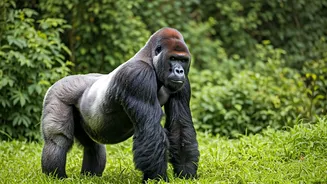
Gorillas: Maintaining Order
In gorilla groups, while silverback males are typically the leaders, female gorillas still play a crucial role in maintaining social order and cohesion. They may not hold the top position in the hierarchy, but they can be very influential in the group’s dynamics. The females have social bonds, particularly with each other, and they frequently make their voices heard, sometimes even challenging the silverback’s decisions. Their social behavior greatly contributes to stability and conflict resolution within the group. The cooperative behavior and strategies of female gorillas demonstrate their vital role in their society.