



Pebble Proposals: Social Economy
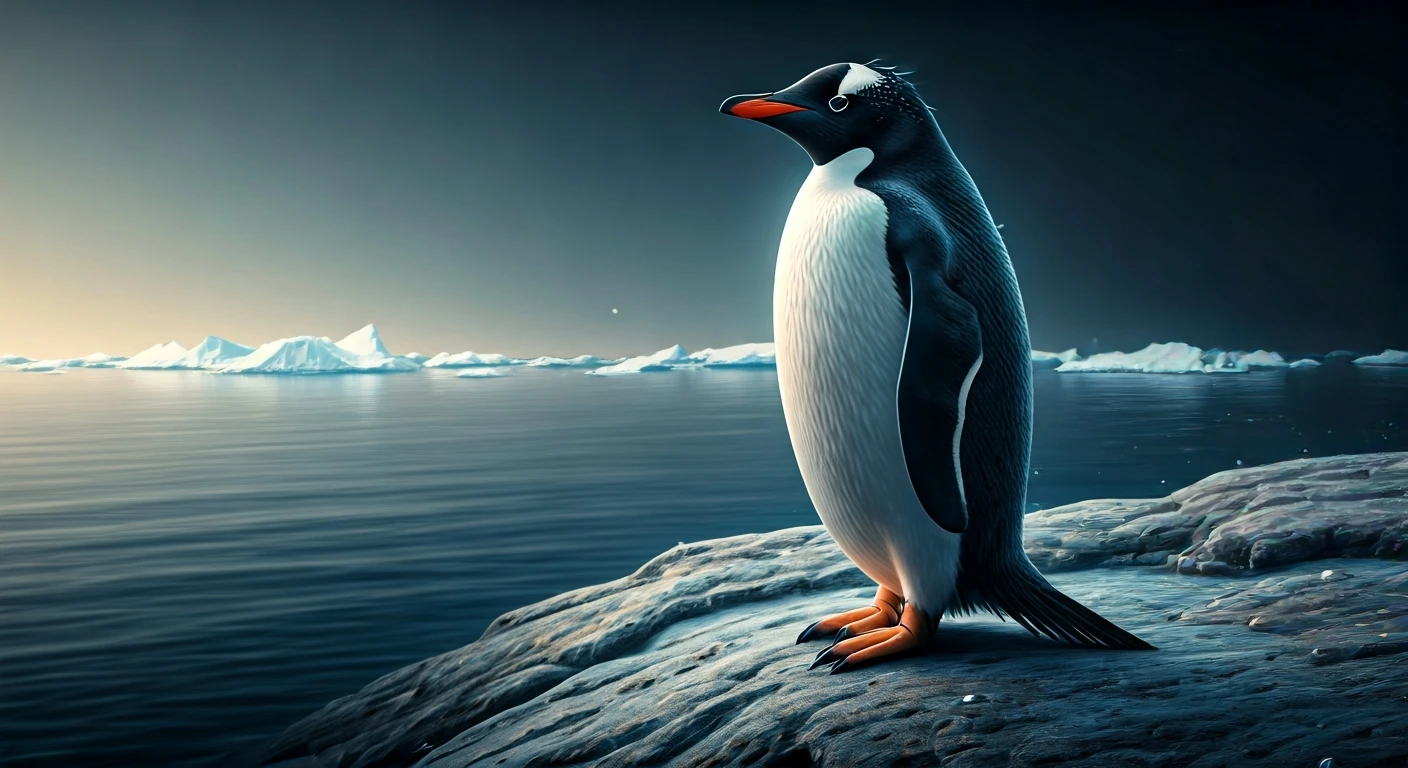
In the penguin world, especially among Gentoo and Adélie species, a simple pebble holds immense value, serving as the currency for courtship and nest building.
With limited nesting real estate on icy terrains, smooth stones are crucial for keeping delicate eggs off the frigid ground. This scarcity has cultivated a unique 'pebble economy' where males diligently seek out the most aesthetically pleasing stones to present as a proposal to a potential mate. This system, however, isn't without its illicit activities; the competition for prime nesting materials often leads to opportunistic 'thefts' where bachelor penguins might snatch a coveted pebble when a couple is momentarily distracted, underscoring the intense drive for successful reproduction and secure nesting sites.
Physics of the Waddle
The seemingly awkward waddle of a penguin is, in fact, a brilliant demonstration of biomechanical efficiency. Rather than a sign of clumsiness, this side-to-side swaying motion is a sophisticated adaptation for energy conservation. By leveraging their short legs and relatively heavy bodies, penguins utilize a pendulum-like gait. With each step, they store and release energy, which then aids in propelling them forward. For birds with substantial body fat and limited limb length, this method of locomotion is the most energy-efficient way to traverse icy landscapes, minimizing the expenditure of vital calories required for survival and activity in harsh environments.
Ancestral Giants Roamed
The familiar image of a penguin is often dwarfed by the reality of their ancient relatives. While Emperor Penguins are the largest living species, their ancestors were colossal beings. Millions of years ago, prehistoric Earth hosted penguin species of immense proportions. Fossil discoveries in New Zealand have unveiled the existence of the Kumimanu biceae, a remarkable species that stood an impressive 5 feet 11 inches tall and tipped the scales at over 100 kilograms. These ancient giants paint a vivid picture of a vastly different evolutionary past for penguins, far removed from the smaller birds we recognize today.
Salt Sneeze System
Surviving in oceanic environments presents a significant challenge: obtaining freshwater. Penguins have evolved an extraordinary biological solution to this problem. They possess a specialized gland, known as the supraorbital gland, situated just above their eyes. This gland functions as an internal desalination plant, effectively filtering excess salt directly from their bloodstream. The concentrated saline fluid, a byproduct of this process, is then expelled from the body. Rather than through typical excretion, penguins discharge this brine through their nasal passages, essentially 'sneezing' out the salt to maintain the delicate internal balance required for their survival in saltwater habitats.
Biological Stealth Mode
A penguin's iconic black and white plumage is far from a mere aesthetic choice; it's a sophisticated survival strategy known as countershading. This evolutionary adaptation provides crucial camouflage in both aquatic and aerial environments. When viewed from below by predators like leopard seals in darker waters, the penguin's white belly blends seamlessly with the brighter, sunlit surface of the water. Conversely, when observed from above by aerial predators, their dark backs merge with the shadowy depths of the ocean. This dual-purpose coloration renders them virtually invisible from either direction, greatly enhancing their ability to evade threats.
Not All Live Cold
Contrary to the widespread perception of penguins as exclusively Antarctic dwellers, these adaptable birds thrive in a surprisingly diverse range of climates. While many species are indeed adapted to frigid conditions, some have found ways to flourish in warmer regions. The Galapagos penguin, for instance, inhabits the equatorial zone, demonstrating remarkable resilience. These tropical residents employ strategies such as panting, similar to canines, to regulate their body temperature and seek refuge in the cooler waters of the Cromwell Current. This geographical spread highlights penguins as incredibly versatile creatures, masters of diverse aquatic environments from polar ice to tropical waters.