






Food Self-Reliance Concerns
The Economic Survey expressed a cautionary note regarding India's emphasis on achieving food self-reliance, specifically in relation to the ethanol-blending
push. This focus may introduce risks that need careful management. The survey suggests the necessity for a balanced approach that promotes food security while mitigating potential adverse effects stemming from this strategy. The report likely emphasizes the need for continuous monitoring and adaptive measures to ensure the long-term sustainability of the food sector, especially as it relates to resource allocation and policy adjustments. The analysis probably scrutinizes the complex balance of food security, environmental impact, and economic feasibility. Furthermore, the survey may emphasize the importance of careful planning and adaptability to changing circumstances to secure the stability of India's agricultural sector.
Financial Projections and Growth
The Economic Survey offered its own projections and compared them against real GDP growth. The document likely provided an in-depth analysis of the factors driving the economy. It almost certainly analyzed the accuracy of past economic forecasts and evaluated the methods used to predict future trends. The comparison between the projections and the real outcomes gave a useful assessment of the economic forecasting abilities. The survey's comparison could also serve as a tool for making future predictions more reliable, with an emphasis on improving the methodologies and the understanding of economic patterns. It would have also scrutinized any deviations from the anticipated growth, investigating their causes and their possible impact on the economy. The thorough evaluation provided by the survey provides valuable insights to policy-makers.
Financing Climate Goals
The Economic Survey highlighted the global climate finance gap, estimating it to be around $4 trillion. The survey stressed the crucial role of bond markets in bridging this gap. The document probably described how crucial it is to get money to fund projects to combat climate change, such as sustainable energy and infrastructure. It likely also examined how governments, companies, and international financial organizations may work together to tackle climate change and boost sustainable development. The survey emphasizes that investment in green bonds and related instruments is key to meeting sustainability objectives and decreasing the financial burden. The survey may discuss ways for attracting more money to the fight against climate change and suggest different plans for lowering the money gap, such as public-private partnerships.
Digital India Reality
The Economic Survey examined whether 'Digital India' has truly become a reality within households. The report likely provided an in-depth review of digital adoption across Indian homes. The survey most likely assessed the availability of digital infrastructure, including internet access and digital literacy. The analysis also covered the ways in which digital technologies have affected different aspects of daily life, such as education, healthcare, and finance. Furthermore, the survey could have examined the challenges and opportunities presented by digitalization in rural and urban areas. By taking into account digital adoption rates and identifying areas where improvements were needed, the survey helped to highlight the progress and obstacles to widespread digitalization across India. The survey's findings provide a thorough overview of the impact of digital initiatives on the lives of Indian citizens.
Investment Horizons
The Economic Survey recommended long investment horizons in the private sector for innovation and skill development. These measures were intended to support national objectives. The survey would have explained how promoting long-term investments fosters creativity, technology, and human capital development. It probably detailed policies and strategies that encourage companies to put money into long-term initiatives rather than short-term gains. The emphasis on skills development would have considered the need for a competent workforce and the advantages of investing in education and training. The survey most likely emphasized how important it is to align private sector investments with long-term national growth objectives, building a sustainable and competitive economy. The report probably discussed tax incentives, regulatory reforms, and other measures intended to improve the long-term investment ecosystem.
Rupee Weakness and Tariffs
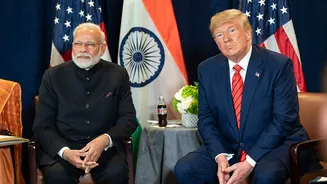
The Economic Survey identified a potential silver lining in the weakness of the rupee amid potential 50% tariffs imposed by Trump. The survey likely presented an analysis of the possible effects of the weakening of the rupee on the Indian economy. It probably discussed how a weaker currency might help India's exports by making them more affordable in global markets. The report likely assessed how possible tariffs could affect trade relations and economic development between India and other nations. The survey probably described the effects of these economic circumstances on the Indian economy, emphasizing both the difficulties and the chances. It may have considered the need for strategic responses to the changes in global trade and exchange rates in order to maintain economic stability and growth. The findings would have offered insights into the complicated relationship between trade policies and currency fluctuations.