






Starship V3 Roars to Life
SpaceX recently completed a significant phase of testing at its Starbase facility, culminating in the activation of a new Super Heavy V3 booster, designated
Booster 19. This testing campaign involved loading cryogenic fuel and oxidizer onto a V3 vehicle for the very first time, a crucial step in preparing for its maiden voyage. The static fire test, which saw Booster 19's engines briefly ignite while secured to Pad 2, was a landmark event. This particular test utilized only 10 of the booster's planned 33 Raptor engines, with the remaining 23 slated for installation prior to a full-power test. The operation experienced an early termination due to an issue originating from the ground systems, highlighting the complex nature of these advanced tests. Pad 2 itself represents an expansion of Starbase's launch capabilities, promising to double the site's capacity once fully operational.
Gearing Up for Flight
The recent static fire of Booster 19 is a vital precursor to Starship's twelfth test flight, which SpaceX aims to launch in early to mid-April. This upcoming mission holds particular significance as it will be the inaugural flight for a Starship Version 3 (V3) vehicle. Accompanying Booster 19 on this historic journey will be Ship 39, the Starship upper stage, which has recently passed its critical "cryoproofing" test at Starbase's Massey site. This rigorous testing ensures the upper stage can withstand the extreme cold temperatures of its cryogenic propellants, a fundamental requirement for spaceflight. The successful completion of these preliminary tests underscores SpaceX's relentless pace in advancing its ambitious Starship program.
V3: A Giant Leap
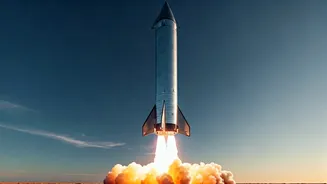
The latest iteration, Starship V3, represents a substantial advancement over its predecessors. It stands at an impressive 408.1 feet (124.4 meters), slightly taller than the V2 model's 403.9 feet (123.1 meters). This increased stature is accompanied by a significant surge in power, thanks to the integration of the new V3 Raptor engine. SpaceX founder and CEO Elon Musk has indicated that this enhanced capability will allow Starship V3 to transport over 100 tons to low Earth orbit, a dramatic increase from the approximately 35 tons achievable with Starship V2. This jump in payload capacity is a critical development for realizing SpaceX's long-term vision of interplanetary travel and establishing a sustainable presence on the Moon and Mars.
Venturing Beyond Earth
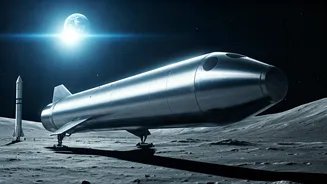
Version 3 of the Starship program is engineered with the ambitious goal of facilitating human journeys to the Moon and Mars. However, achieving these monumental objectives necessitates a series of complex prerequisites. Before interplanetary voyages can be contemplated, Starship V3 must first demonstrate its ability to achieve a successful orbit around Earth. Furthermore, a critical capability that must be validated is the demonstration of in-orbit fuel transfer, a process where one spacecraft can refuel another while in space, away from Earth. Mastering these fundamental orbital operations is paramount to enabling the extended missions required for lunar landings and eventual Martian colonization, pushing the boundaries of what's possible in space exploration.