






Understanding Essential Nutrients
Our bodies depend on six core categories of nutrients for survival: carbohydrates, proteins, fats, vitamins, minerals, and water. The critical aspect of these
'essential' nutrients is that our bodies cannot produce them sufficiently on their own, necessitating their acquisition through our daily food intake. While macronutrients like carbs, proteins, and fats, along with water, are typically consumed without much conscious effort, micronutrients—vitamins and minerals—often go unnoticed. However, these play an indispensable, behind-the-scenes role in bodily functions, influencing everything from how our genes express themselves and enzymes operate, to protecting our cells from damage caused by oxidative stress. This protection is vital, as oxidative stress can lead to chronic inflammation, a significant contributor to serious health conditions like stroke, which tragically ranks as the third leading cause of death globally. Given the urgent need for timely and often costly treatments for stroke, prevention stands out as the paramount strategy to mitigate its impact.
The Study's Approach
To unravel the potential connection between B vitamins and stroke prevention, researchers embarked on an in-depth investigation. Their primary goal was to determine if consistent long-term consumption of B vitamins, as well as their levels present in the bloodstream, correlates with a reduced risk of stroke. To achieve this, they leveraged data from two extensive U.S. population studies. The first, the Women's Health Initiative (WHI), a large-scale, ongoing study focused on women's health and aging, provided dietary information from approximately 120,000 postmenopausal participants. Using food-frequency questionnaires, researchers estimated the long-term intake of B vitamins from both meals and any dietary supplements taken. Complementing this, data from the All of Us Research Program (AoU), a broad initiative by the National Institutes of Health aiming to create a comprehensive and diverse health database, was analyzed. This program contributed data from nearly 100,000 participants who had undergone B vitamin blood tests, enabling the assessment of circulating nutrient levels.
Key Study Findings Unveiled
By integrating information from these two substantial and reliable datasets, the research team was able to draw significant correlations between B vitamin consumption, both reported and measured, and the incidence of stroke over time. The study revealed a compelling association: individuals with higher dietary intake of thiamin (B1), riboflavin (B2), and niacin (B3) exhibited a lower risk of experiencing a stroke. These findings represent some of the most robust evidence to date for the protective role of these particular nutrients. While vitamin B6 (pyridoxine) and vitamin B9 (folate) also showed links to reduced stroke risk, these associations were not as consistent. The researchers also observed that participants reporting higher B vitamin intake were more inclined towards healthier lifestyle choices, such as supplement use, superior diet quality, and increased engagement with healthcare. Crucially, even after accounting for these 'healthy-user' biases, the beneficial link between elevated B vitamin intake and a decreased stroke risk persisted. The congruence of these results, supported by both dietary records and direct blood measurements, strongly suggests a meaningful contribution of these B vitamins to stroke prevention.
Incorporating B Vitamins Daily
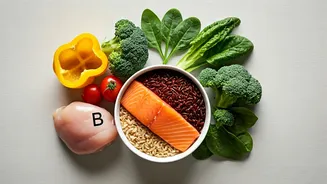
The good news is that boosting your intake of beneficial B vitamins doesn't require drastic dietary overhauls. These essential nutrients are abundantly found in a variety of common, everyday foods that likely already form part of a balanced diet. For individuals specifically aiming to enhance their intake of thiamin, riboflavin, and niacin to potentially reduce stroke risk, prioritizing certain foods is key. Thiamin is readily available in whole grains such as brown rice, lean meats like pork and poultry, soybeans, nuts, peas, dried beans, and fortified products like bread and cereals. Riboflavin can be easily incorporated through eggs, dairy items including milk and yogurt, and again, fortified grains. Niacin is plentiful in poultry, fish, peanuts, legumes, whole grains, and seeds. Rather than focusing on a single nutrient, this research underscores the broader importance of a well-rounded dietary pattern. Consuming a diverse range of foods like whole grains, lean proteins, legumes, nuts, and dairy naturally supports cardiovascular health and ensures you receive adequate B vitamins. While supplements can play a role, they are often unnecessary for those maintaining a nutritious diet. Consulting with a healthcare professional is advisable before starting any new supplements, including B-complex or multivitamins, to ensure they align with your individual health needs.