







Sweetener Showdown Begins
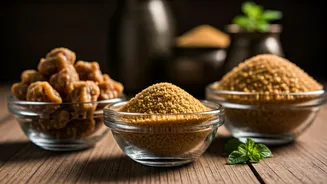
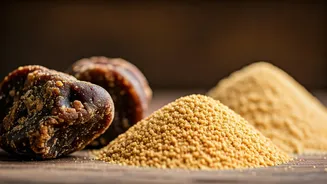
The realm of natural sweeteners offers an array of choices, with jaggery, desi khand, and brown sugar leading the pack. Jaggery, derived from sugarcane
or palm, is a traditional unrefined sugar, packed with nutrients. Desi khand, an Indian-style raw sugar, undergoes minimal processing. Brown sugar, on the other hand, is refined white sugar with added molasses. Each sweetener carries unique qualities that make them stand out from one another. This comparative analysis helps you understand the nuances to decide which one to integrate into your diet.
Jaggery's Nutrients Revealed
Jaggery, a time-honored sweetener, is more than just sweetness. It provides iron, which is essential for transporting oxygen throughout the body. It also has trace minerals, including magnesium and potassium. These nutrients are frequently absent in refined sugars. The traditional methods used in jaggery production retain some of the molasses, contributing to its rich mineral content. Its slow-digesting qualities make it a healthier alternative. However, it’s still high in sugar, so moderation is key. When choosing jaggery, consider its source and purity, as quality can vary.
Desi Khand: A Closer Look
Desi khand, native to India, stands out due to its minimal processing. This raw sugar retains a portion of its natural molasses. This gives it a slightly different nutritional profile compared to refined sugars. Desi khand offers small amounts of minerals, such as calcium and iron, which are lost in the refining process. Its less refined nature often results in a lower glycemic index, indicating a slower release of sugar into the bloodstream. This slower release can help in managing blood sugar levels. Like jaggery, it must be consumed in moderation due to its sugar content.
Brown Sugar: Refined Insights
Brown sugar, the most refined option, is typically white sugar with molasses added back in. While molasses contributes a small amount of minerals, the base is still primarily sucrose. The addition of molasses gives brown sugar its characteristic flavor and color. It does offer trace amounts of minerals, but its nutritional value is less than that of jaggery or desi khand. Its glycemic index remains similar to white sugar. It is essential to use it sparingly. Consumers should carefully check labels and serving sizes to control their sugar intake.
Health Implications Explored
The choices among these sweeteners have varying health consequences. Jaggery's iron content supports healthy blood levels, while desi khand's minimal processing makes it a slightly better option compared to refined sugar. Brown sugar, though flavorful, doesn’t offer significant nutritional advantages. Diabetics and individuals seeking to manage their blood sugar should be cautious with all these options. The glycemic index and the total sugar content are crucial considerations. Portion control and overall dietary patterns play a vital role. Choosing the right sweetener aligns with your health goals.
Making the Healthier Choice
When choosing among jaggery, desi khand, and brown sugar, consider your overall health goals. Jaggery provides some mineral content and is a good traditional alternative. Desi khand's minimal processing provides a slight nutritional edge. Brown sugar, a refined option, offers the least nutritional value. It is essential to remember that moderation is critical, regardless of which sweetener you choose. Consulting with a healthcare professional or a registered dietitian can provide personalized guidance. Making informed decisions will help you to satisfy your sweet tooth.