
A Grim Outlook
Scientists, like Donald Kessler, previously developed models to showcase the hazards involved. These concerns have persisted, even as more and more satellites
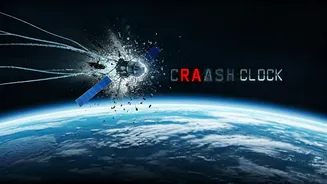
are launched into orbit. A new risk measurement tool, known as the CRASH Clock, now provides a stark and urgent warning. The CRASH Clock utilizes satellite position data to project the timeframe before a catastrophic collision if avoidance capabilities cease to function. Currently, the CRASH Clock indicates a mere 5.5 days, a very short period of time. The risk level has increased dramatically; in 2018, before the launch of Starlink, the CRASH Clock stood at 164 days, highlighting the accelerated dangers.
Global Dependence Examined
Humanity's investment in satellites extends beyond financial costs. The value stems from our dependence on this orbiting technology. Satellites facilitate a wide array of vital functions, including television broadcasts, navigation, weather forecasts, and financial transactions. A complete satellite shutdown would cause widespread disruptions; global communication systems would fail, transportation would cease, timekeeping would be affected, and supply chains would collapse. The scenario, akin to a disaster movie, represents a very real threat. Even a single solar storm or software glitch could destroy every satellite within a week.
Past Instances of Failure
A real-world example of satellite disruption occurred on May 19, 1998, with the failure of the Galaxy IV communications satellite due to intense solar flares. This loss disabled 80–90% of pagers across North America, impacting critical medical services and broadcasting networks such as NPR, CBS, and the Chinese Television Network. Although services were restored via other satellites, the consequences could be far more severe today. Almost 30 years ago, space was far less crowded, and an event like this today could lead to a chain reaction, bringing everything down.
Increasing Orbital Traffic
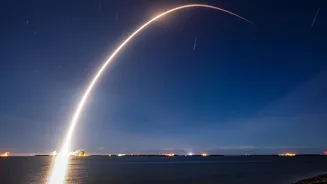
The number of satellites in orbit has grown exponentially, especially with the introduction of SpaceX's Starlink satellites. By January 2026, the number of satellites in orbit had reached around 15,000, with Starlink accounting for approximately two-thirds. This increasing congestion requires frequent maneuvers to avoid collisions; SpaceX, for instance, performs collision avoidance maneuvers every two minutes. However, if a satellite operator, such as SpaceX, loses contact with its technology, due to a solar storm or software glitch, it would be unable to carry out the necessary evasive actions, potentially triggering a chain of crashes that would bring down all of Earth's satellites within days.
The Kessler Syndrome
Scientists have voiced concerns about the risks since the dawn of the Space Age. In 1978, NASA researcher Donald Kessler published a paper in the journal Icarus, highlighting the rising collision risks, which could lead to a debris belt, blocking access to space. This idea led to the concept of the 'Kessler Syndrome,' a scenario wherein collisions lead to more collisions. The CRASH Clock offers a clear warning about the approaching Kessler Syndrome. The clock has dropped significantly in less than a decade, from five and a half months to only five and a half days, highlighting the increasing dangers. Actual collisions and outages are putting the fragility of satellite systems on display.