





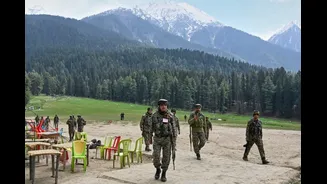
A Valley's Slow Bloom
The mist hanging over the Lidder River in Pahalgam signals a subtle shift, one year after an event that sent ripples through the Himalayas. The vibrant
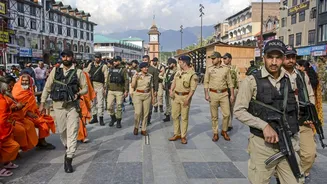
tourist circuit of Jammu and Kashmir is beginning to stir, albeit cautiously. The aftermath of 2025 left its mark, evident not only in enhanced security measures but also in the stark data. From May 2025 to April 2026, Pahalgam welcomed approximately 4.51 lakh domestic tourists. While impressive for many locales, this figure represents a significant 65% to 70% decline from the typical 1.5 million annual visitors. The valley is demonstrating remarkable fortitude as it navigates this challenging period, striving to regain its former footing. This period has been characterized by a deep reliance on resilience and a careful approach to rebuilding trust and accessibility for visitors.
Local Livelihoods Tested
For the residents whose livelihoods are intrinsically tied to the influx of tourists, the past year has been a testament to sheer survival. Md Ashu Darr, a taxi operator from Sonamarg, reflects on the post-2025 Pahalgam Attack landscape. He notes that while conditions are not entirely back to what they were, there's a definite uptick in activity, with tours to Sonamarg and Pahalgam seeing renewed bookings. He acknowledges the immense difficulty of the preceding year for everyone involved, but expresses optimism about the circuit's gradual revival. However, he also observes that the business impact has been profound, suggesting a long road to full recovery for many. The situation is more somber in Aharbal, where the famed waterfall, a magnet for thousands, has seen fewer visitors. Local drivers there speak of the detrimental effects of keeping popular sites restricted, highlighting the economic strain caused by accessibility issues.
Baisaran's Lingering Closure
The most significant impediment to Pahalgam's complete recovery remains its premier attraction: Baisaran Valley. Dubbed 'Mini Switzerland,' this picturesque meadow has been largely inaccessible since the attack. Gulzar Ahmad, vice president of Taxi Stand Number 1, reports a substantial reduction in their business, estimated at around 60%. This taxi stand manages a fleet of approximately 600 cabs, with another facility in the vicinity, Taxi Stand No. 1, operating about 250 vehicles. The desire to visit these expansive meadows is a common aspiration for most travelers to the valley. The continued closure leads to considerable disappointment among tourists, directly impacting the local economy. According to reports, a ponywala, a crucial part of the tourist experience, now earns only ₹500 to ₹600 daily, a stark contrast to their earnings during peak seasons. The reopening of Baisaran is eagerly anticipated by both visitors and service providers.
Pilgrimage's Enduring Pull
While leisure tourism faced significant headwinds, the spiritual heart of the Valley remained an emblem of resilience. Ravi Dutt, a retired school teacher who managed a community kitchen during the 2025 Amarnath Yatra, witnessed this enduring spirit firsthand. He described the courage and reassurance in seeing people return to the valley, with hundreds of thousands undertaking the sacred journey from Baltal and Pahalgam. Dutt, who participates annually, observed a strong resolve among people to ensure that the pilgrimage and their affection for Kashmir would not be diminished by past events. This unwavering faith served as a powerful testament to the region's enduring allure and the deep-rooted connection many feel towards it, providing a crucial sense of continuity and hope amidst ongoing recovery efforts.
Tech for Trust Building
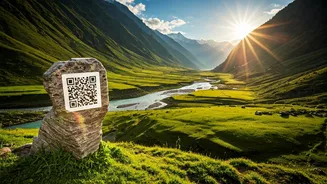
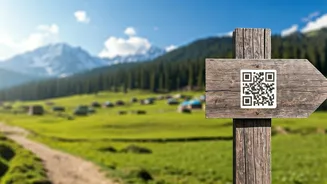
To help bridge the trust deficit and enhance security, the Jammu and Kashmir administration has implemented a novel QR code-based identification system. This innovative approach extends beyond hotels, encompassing every ponywala, hawker, and external vendor operating within tourist areas. The system empowers tourists to scan a provider's unique code to verify their credentials, thereby aiming to prevent unauthorized individuals from accessing tourist hubs. This digital solution is designed to foster a sense of security and transparency for visitors, ensuring a more reliable and verifiable interaction with local service providers. It represents a forward-thinking strategy to rebuild confidence and streamline operations within the tourism ecosystem, making it a key component of Pahalgam's recovery plan.
Glimmers of Reopening
Optimism is growing as authorities project a brighter future for Pahalgam's tourism sector. Chief Minister Omar Abdullah announced in the J&K Assembly on February 19 that the administration has plans to reopen all 48 previously restricted sites by May 2026. To date, 41 of these locations have been progressively made accessible again. The remaining seven, which include sensitive areas such as Baisaran, are contingent upon final security assessments and clearance. As the valley gears up for the anticipated summer influx, the emphasis remains firmly on implementing 'comprehensive security protocols.' For the local populace, the prevailing hope is that by the time the snow completely melts, the enchanting 'Mini Switzerland' they cherish will once again be open for the world to explore and enjoy.