

The Slippery Situation
Many home cooks invest in quality knives and ingredients, yet overlook a fundamental safety issue: an unstable cutting surface. The common experience of
a cutting board shifting unexpectedly during chopping can lead to accidents and frustration. This instability, often caused by the slick interaction between a dry board and a smooth countertop, undermines the efficiency and hygiene of food preparation. While expensive gadgets exist, a remarkably effective solution lies in an everyday kitchen item, leveraging basic scientific principles to create a secure workspace. This simple fix addresses a common kitchen hazard that can turn a pleasant cooking session into a risky endeavor, ensuring your focus remains on the culinary task at hand rather than the precarious movement of your board.
Science of Stability
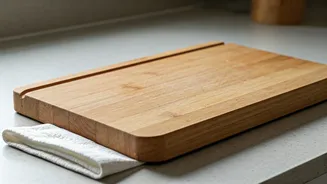
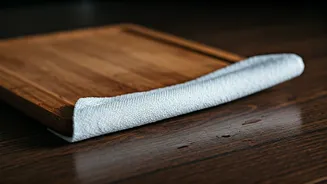
The effectiveness of a damp towel in securing a cutting board is rooted in fundamental physics. The low friction between a dry board (whether wood or plastic) and a polished countertop is significantly increased when a damp towel is introduced. Water's property of surface tension creates a strong bond between the towel and both the board and the counter, essentially acting as an adhesive. This enhanced friction prevents the board from sliding, even during vigorous chopping or slicing. Furthermore, this method is adaptable to different countertop textures and board materials, ensuring a stable base regardless of surface porosity or smoothness. The damp towel doesn't just prevent slippage; it ensures consistent stability, which is vital for maintaining a controlled and safe kitchen environment for all your culinary adventures.
Hygiene and Board Care
Beyond just preventing slips, a stable cutting board contributes significantly to kitchen hygiene. When a board remains firmly in place, it minimizes the risk of food debris falling onto potentially unsanitary areas of the countertop. Precise movements are also facilitated, reducing the chance of accidental nicks to other ingredients or surfaces. This is particularly important when switching between raw meats and vegetables, where cross-contamination is a concern. For wooden boards, while they possess natural antibacterial properties, their porous nature can absorb liquids. Using a damp (not soaking wet) towel helps prevent excessive moisture absorption, thus safeguarding the board from warping or damage, while still offering stability. Plastic boards, often dishwasher-safe, tend to have smoother undersides, making them more prone to slipping. The damp towel provides crucial extra grip, making them less likely to move during intensive food prep, thereby enhancing both safety and cleanliness.
Simple Setup, Lasting Solution
Implementing this simple yet ingenious hack is remarkably easy. Take a thin kitchen towel or a few sheets of paper towel folded together. Briefly rinse it under cold water and wring it out so it's just slightly moist, not dripping. Lay this damp towel flat on your countertop, then place your cutting board directly on top. Give the board a gentle press to ensure good contact. This method offers a superior alternative to permanent solutions like silicone mats or boards with rubber feet, as it's readily available, cost-effective, and highly functional. The few seconds spent securing your cutting board with a damp towel are a worthwhile investment, leading to a safer, more efficient, and ultimately more professional cooking experience in your own kitchen. It’s a testament to how traditional wisdom, backed by science, continues to offer practical solutions for everyday challenges.