







Culinary Heritage Initiative
Uttar Pradesh, a state renowned for its vast population and rich cultural tapestry, is also a haven for food lovers. With 75 districts, each harboring
a unique spectrum of culinary traditions, the state government has launched the 'One District, One Cuisine' (ODOC) scheme. This ambitious project, inspired by the successful 'One District, One Product' initiative, aims to spotlight and promote signature dishes from every district. The primary objective is to foster culinary entrepreneurship, enhance hygiene standards across food businesses, and build a strong global brand for these traditional flavors. By assigning specific dishes to each district, the government seeks to provide better branding and market access, thereby strengthening the bond of shared culinary experiences among its people and elevating the state's gastronomic identity on a larger scale.
A Symphony of Vegetarian Delights
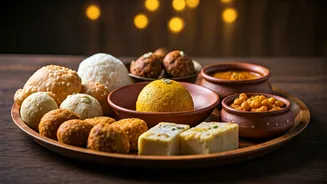
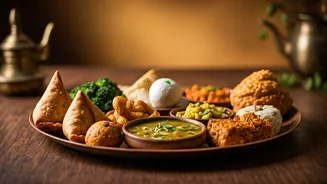
The recently unveiled 'One District, One Cuisine' list for Uttar Pradesh's 75 districts exclusively features vegetarian dishes, encompassing a wide array of sweets, savories, and street food favorites. For instance, Sultanpur is recognized for its peda, samosa, kadhai puri, red peda, and jalebi, while Barabanki celebrates chandrakala and red peda. Amethi offers samosa, jaggery kheer, and gulgula, and Ambedkar Nagar highlights balushahi, chaat, and khajla. The Devipatan division, including Gonda, features dahi vada, and Bahraich is known for chamcham and kachori. Balrampur presents coconut barfi, kalakand, ghamanja, and chaat, with Shravasti noted for imarti. Lucknow, the state capital, boasts revdi, mango products, chaat, and malai makkhan. Agra is celebrated for petha and dalmoth, while Firozabad features tikki and kachori. Aligarh contributes dairy products and kachori, and Mathura is famous for its peda and makhan mishri. Moradabad's culinary offerings include dal dishes and handi halwa, and Hardoi is associated with aloo puri, laddoo, and laozhad. Lakhimpur Kheri's specialties are banana, jaggery, khoya peda, kheer mohan, and rasgulla. Raebareli is recognized for its spices, and Sitapur offers makhan malai, samosa, mirchi pakoda, and peda. Unnao's list includes kala jamun, samosa, kushli, and trilok pari. Ayodhya highlights chandrakala, balushahi, and dahi, while Zamgarh is noted for white carrot halwa. Mahoba's specialty is date jaggery, and Meerut is famed for gajak and revdi. Prayagraj contributes kachori, samosa, and rasmalai, with Hamirpur focusing on bundeli dal-based preparations. Finally, Varanasi is renowned for thandai, tiranga barfi, lassi, and Banarsi paan.
Expert and Government Perspectives
The exclusive focus on vegetarian cuisine within the 'One District, One Cuisine' initiative has sparked considerable debate. Renowned food historian Pushpesh Pant has critically labeled the all-vegetarian selection as a 'half-baked' and discriminatory measure, suggesting it displays ignorance and bigotry, despite his appreciation for vegetarian dishes. In response to the omission of popular non-vegetarian items like galawati kebab, Awadhi biryani, and Kakori kebab, Cabinet minister Rakesh Sachan clarified that the exclusion was not intentional. He stated that non-vegetarian dishes could be added in the future if recommended. The primary aim, he explained, is not to promote individual popular items but rather dishes that can benefit a larger population through enhanced packaging, sales, and promotion. Sachan emphasized the flexibility of the list, noting that it can be modified based on public feedback and local suggestions, requiring only the Chief Minister's approval for changes, not a full cabinet approval, thus keeping the initiative adaptable to evolving public demand.