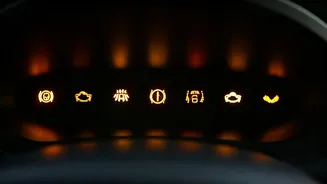







Battery Warning Light
The battery warning light, often resembling a battery or a rectangular box with a plus and minus sign, illuminates when there's an issue with the car's
charging system. This doesn't always indicate a dead battery; it could mean the alternator isn't charging the battery properly. If this light comes on while driving, it's crucial to address it immediately. Continuing to drive can drain the battery, leading to a breakdown. Have the charging system inspected, which includes the battery, alternator, and related wiring, to diagnose and fix the problem. This will help prevent being stranded and keep the car running reliably.
Oil Pressure Light
The oil pressure light, typically an oil can symbol, signifies low oil pressure within the engine. This is a serious issue that demands immediate attention. Low oil pressure means the engine isn't getting adequate lubrication, which can cause significant damage due to increased friction between moving parts. If this light appears, it's vital to stop the car as soon as safely possible and check the oil level. Add oil if it's low and have the vehicle inspected by a mechanic to identify the root cause of the pressure loss, such as a faulty oil pump or leaks. Ignoring this warning can lead to costly engine repairs or even complete engine failure.
Engine Temperature Light
The engine temperature light, often a thermometer symbol, alerts you to overheating. This could be due to a coolant leak, a malfunctioning cooling fan, or a problem with the radiator. Overheating can warp engine components, including the cylinder head, and cause substantial damage. If the light comes on, pull over and turn off the engine to allow it to cool down. Never open the radiator cap when the engine is hot. After the engine has cooled, check the coolant level and consider getting the cooling system inspected for leaks or other problems. Addressing overheating promptly can prevent major engine issues.
Brake Warning Light
The brake warning light, often displaying an exclamation mark inside a circle, is crucial for your safety. It can indicate several issues, including low brake fluid, a problem with the brake system, or even that the parking brake is engaged. Low brake fluid can reduce braking effectiveness, while other brake system issues can lead to complete brake failure. If the brake warning light comes on, check the brake fluid level. If it's low, there may be a leak. If the light remains illuminated, it's best to have the brakes inspected by a professional immediately. Driving with brake problems is extremely dangerous.
ABS Warning Light
The ABS (Anti-lock Braking System) warning light, usually displaying the letters 'ABS', signifies a problem with the anti-lock braking system. While the regular brakes will still function, the ABS system, which prevents wheel lock-up during hard braking, won't be operational. This can increase stopping distances and reduce vehicle control in emergency situations. A faulty ABS system could be due to a problem with wheel speed sensors, the ABS module, or other components. If the ABS light illuminates, it's best to have the system diagnosed and repaired by a qualified mechanic to restore full braking performance and safety.
Airbag Warning Light
The airbag warning light, often a figure of a person with a seatbelt or an airbag symbol, indicates a problem with the airbag system. This system is designed to deploy airbags in a collision to protect occupants. If this light is on, the airbags may not deploy in an accident. Potential causes include a faulty sensor, wiring issues, or a problem with the airbag control module. It's crucial to have the airbag system checked and repaired by a professional as soon as possible. Ensuring the airbags are functioning correctly is critical for passenger safety in the event of a crash.
Engine Check Light
The engine check light, also known as the malfunction indicator lamp (MIL), is one of the most common warnings drivers encounter. It often looks like an engine. This light can indicate many issues, from a loose gas cap to more serious problems like engine misfires or emissions issues. When the light illuminates, it's best to have your car's computer scanned to retrieve any stored diagnostic trouble codes (DTCs). This information can help identify the source of the problem. Ignoring this light can potentially lead to further damage to the engine or other components. Addressing the issue promptly can save money on potential repairs.