





A Voyage of Discovery
The bougainvillea, affectionately known as the 'paper flower' for its delicate, papery blooms, is far more than just a visually stunning addition to gardens.
Its existence is deeply intertwined with the spirit of 18th-century global exploration. This resilient and vibrantly coloured climber embarked on a significant journey, charting a course from its native South American lands to become a familiar sight in gardens across the world, notably gracing many Indian landscapes. The plant's initial documentation occurred during a major global expedition led by the French explorer Louis Antoine de Bougainville in the 18th century, with French botanist Philibert Commerçon being the one to first formally record its existence in Brazil. This era was marked by extensive maritime exploration, where the discovery and cataloging of new flora and fauna were integral parts of these ambitious scientific and geographical endeavors.
South American Roots
The origins of the bougainvillea are firmly planted in the diverse landscapes of South America. Specifically, countries like Brazil, Peru, and Argentina are identified as its native homelands. In these regions, bougainvillea typically thrives as a robust, thorny vine or a sturdy shrub, well-adapted to the warm climatic conditions. Its natural habitat often features areas where it can climb or spread freely, showcasing its vigorous growth. This adaptation to warmth and its inherent resilience are key factors that contributed to its eventual successful propagation in various other parts of the world with similar environmental characteristics.
Named for Adventure
An intriguing aspect of the bougainvillea's history is its nomenclature. Contrary to what one might expect, the plant was not named after the botanist who officially documented it, Philibert Commerçon. Instead, it received its name in honour of the esteemed leader of the expedition, Louis Antoine de Bougainville. This naming convention underscores the close relationship between scientific discovery and the broader context of exploration during that historical period. The honour bestowed upon the expedition leader highlights the significance of the voyages themselves in bringing new botanical knowledge back to Europe and the wider world, a testament to the era's fascination with global discovery.
Global Spread and Trade
The bougainvillea's journey from South America to global renown was significantly facilitated by the colonial trade routes and the establishment of botanical gardens. By the early 19th century, the plant had made its way to Europe. From there, it was systematically introduced and distributed across various colonial territories. Botanical gardens played a crucial role in acclimatizing and propagating these new species, acting as hubs for botanical exchange. This network of trade and cultivation led to its widespread presence in diverse climates, including its eventual arrival and widespread adoption in regions such as India, where it found a welcoming environment.
The True Nature of Blooms
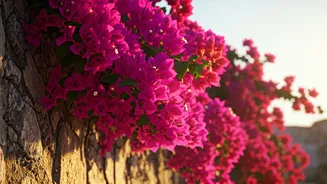
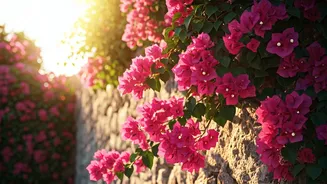
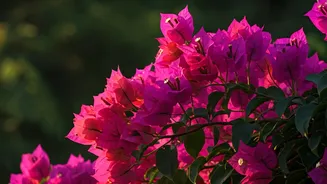
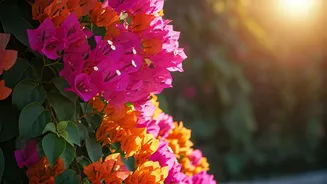
One of the most fascinating and often surprising characteristics of the bougainvillea is the nature of what we perceive as its 'flowers'. In reality, the vibrant, colourful parts that capture our attention are not true flowers at all. These showy structures are actually modified leaves known as bracts. The plant's actual flowers are much smaller and less conspicuous, typically white, and are nestled within the centre of these colourful bracts. This unique botanical feature is a remarkable adaptation that contributes to the plant's visual appeal, effectively using its bracts to attract pollinators by mimicking the function of petals.
A Garden Staple
The bougainvillea's exceptional adaptability and striking visual appeal have cemented its status as a highly favoured garden plant, particularly in tropical and subtropical zones worldwide. Its remarkable drought resistance means it can thrive even with limited water, a significant advantage in many climates. Combined with its incredible spectrum of vibrant colours and its capacity to flourish in challenging environmental conditions, the bougainvillea quickly became a staple in gardens across these regions. In India, in particular, it is ubiquitous, adorning walls, fences, and pergolas, cherished for its low maintenance and its prolific, stunning floral displays that add a splash of colour to countless landscapes.