




Moroccan Clay & Argan
Journey to the Atlas Mountains for a glimpse into a cherished Moroccan tradition: Rhassoul clay. This mineral-rich earth, abundant in magnesium, has been
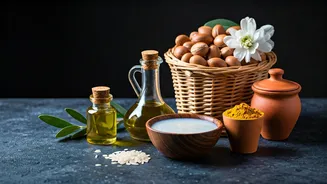
a cornerstone of beauty for generations. Its remarkable ability to draw out impurities like sebum and blackheads from pores is unmatched, all while respecting the skin's natural balance. This cleansing ritual is traditionally complemented by the liberal application of Argan oil. Revered as 'liquid gold,' this oil is a powerhouse of Vitamin E and linoleic acid, instantly aiding in the repair of the skin's protective barrier. To recreate this efficacious treatment, simply blend the Rhassoul clay with warm water to form a smooth paste. Apply it as a mask, and after rinsing, gently press a few drops of pure, cold-pressed Argan oil into your still-damp skin for optimal absorption and nourishment.
Cleopatra's Milk Bath
Delve into the legendary beauty regimen of Cleopatra, whose preference for bathing in sour donkey milk and honey offered a powerful solution to the arid Egyptian climate. This ancient method provided essential hydration, a vital necessity for surviving the desert. The inherent lactic acid in sour milk acts as a gentle alpha-hydroxy acid, effectively sloughing away dead skin cells without abrasive scrubbing. Honey, a superb natural humectant, then draws moisture into the skin, creating a deeply hydrating experience. Recreating this luxurious soak is accessible today; simply add two cups of full-fat milk and half a cup of raw honey to a warm bath and immerse yourself for approximately 20 minutes to reap the benefits.
East Asian Rice Water
Explore the secrets behind the exceptionally healthy and long hair admired in historical accounts of Chinese Yao women and Japanese Heian period court ladies. Their luxurious locks weren't achieved with modern products but with a simple, readily available ingredient: the starchy water left after washing rice. This nutrient-rich liquid is brimming with amino acids and inositol, an antioxidant known to penetrate the hair shaft and facilitate internal repair. To emulate this practice, soak clean, uncooked rice in water at room temperature for a full 24 hours to allow it to ferment. After straining the liquid, apply it generously to your scalp post-shampoo, leave it on for 20 minutes, and then rinse thoroughly. The resultant shine and strength are remarkable.
Greek Olive Oil
Understand the ancient Greeks' profound reverence for olive oil, famously termed 'liquid gold' by Homer, and its widespread use by women from head to toe to combat the harsh Mediterranean sun. Scientifically, this practice is well-justified. Extra virgin olive oil is exceptionally rich in squalene and fat-soluble vitamins (A, D, E, and K), serving as a potent occlusive agent that effectively seals moisture within the skin and hair. To experience its transformative effects, warm up two tablespoons of olive oil and massage it thoroughly from your scalp down to the tips of your hair. Afterward, wrap your head in a warm towel for 30 minutes before proceeding with a double shampoo. This treatment reveals why the Greeks held olive oil in such high esteem.
Indian Turmeric Ubtan
Witness the power of ubtan, a cherished Ayurvedic ingredient that goes far beyond its ceremonial role in pre-wedding Haldi rituals. This traditional preparation is a testament to effective skincare formulation. Turmeric contributes curcumin, a potent antioxidant that actively combats acne-causing bacteria and addresses stubborn pigmentation concerns. Crafting your own ubtan is straightforward: whisk together a tablespoon of chickpea flour (besan), a pinch of wild kasturi turmeric, a bit of raw honey, and sufficient rose water to achieve a consistent paste. Apply this mixture and let it sit for 15 minutes. Upon gentle scrubbing and removal, the resulting purified, luminous glow clearly demonstrates its efficacy.