







Near Miss on Taxiway
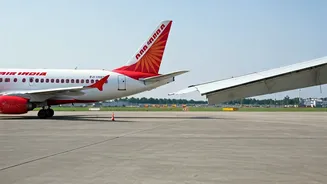
On the evening of February 3rd, a potentially serious mishap was narrowly averted at Mumbai's bustling airport. An Air India flight, designated AI 2732
bound for Coimbatore, was preparing for its departure pushback. Simultaneously, an IndiGo flight, 6E 791, arriving from Hyderabad, was maneuvering on the taxiway after landing. It was during these taxiing movements that the right wingtips of both aircraft inadvertently brushed against each other. Fortunately, both planes were moving at low speeds, and the contact, while causing minor damage, did not escalate into a more significant accident. Passengers were present on both flights at the time of the incident, underscoring the gravity of the situation despite the minimal physical impact.
Regulatory Scrutiny Ensues
Following the wingtip contact, both airlines confirmed that their aircraft were returning to the bay for thorough technical inspections. An Air India spokesperson elaborated that flight AI 2732 was delayed as a direct consequence of the aircraft's wingtip sustaining damage. As a precautionary measure, the aircraft was taken out of service for further engineering evaluations. All passengers were safely deplaned, and the airline committed to making prompt alternative travel arrangements. Similarly, IndiGo stated that its aircraft was undergoing necessary maintenance checks, confirming the contact with another airline's plane during taxiing post-arrival. The Directorate General of Civil Aviation (DGCA) was promptly notified of the event, with officials from its Mumbai division arriving on-site to commence an inquiry into the circumstances surrounding the ground collision.
Understanding Ground Collisions
Incidents like the one involving Air India and IndiGo, while not extremely frequent, typically occur during the critical phases of aircraft movement on the ground, such as pushback from the gate or while navigating busy taxiways. These occurrences often involve subtle yet impactful wingtip strikes or contact between different external parts of aircraft, like the fuselage, tail sections, or wings. Airports with high air traffic volume present a greater likelihood for such close encounters. The DGCA's investigation will aim to ascertain the precise sequence of events, assess adherence to ground handling protocols, and identify any contributing factors that led to the wingtip touch, ensuring that preventative measures are reinforced to maintain the highest safety standards in airport operations.