




Banarasi: Mughal Grandeur
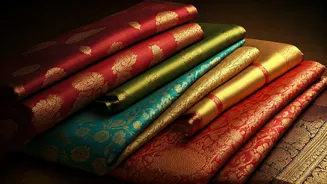
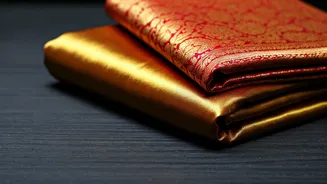
Originating from the historic city of Varanasi, Banarasi silk is synonymous with luxury and is a cornerstone of North Indian celebrations. Its hallmark
is the intricate Mughal-inspired zari brocade, featuring delicate floral patterns known as 'bel' and the classic 'jhallar' leaf motifs along the edges. While the traditional Katan silk version remains a bridal favorite, contemporary interpretations like the lighter 'Tanchoi' weaves and organza variants offer the same regal feel without the bulk, making them ideal for evening events where understated opulence is desired. These modern adaptations allow the wearer to embody the grandeur of a Banarasi silk for less formal occasions, blending traditional artistry with a lighter, more versatile silhouette for the modern wardrobe.
Kanjeevaram: Queen's Power
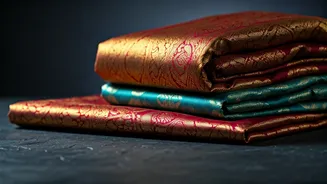
Hailing from Kanchipuram in Tamil Nadu, the Kanjeevaram silk is celebrated as the 'Queen of Sarees' due to its striking contrast borders and structured, commanding presence. Unlike many other silks that drape fluidly, Kanjeevaram textiles are engineered to maintain their form, making them a superb choice for power dressing. The exceptional craftsmanship is evident in the 'Korvai' technique, where the border and body are woven independently and then intricately interlocked, creating a bond so robust it can endure for generations. Adorned with motifs inspired by temple architecture and nature, such as peacocks and geometric checks, this fabric, favored by style icons, makes an assertive fashion statement.
Muga: Golden Investment
For those embracing sustainable luxury, Assam's Muga silk is an unparalleled choice. This is one of the world's most exclusive silks, produced by a unique silkworm native to the region. Its inherent charm lies in its natural, luminous golden hue, negating the need for artificial dyes. Muga silk is a true investment, renowned for its exceptional durability, often outlasting its initial owner, and remarkably, it becomes even more lustrous with each wash. This organic, rare textile with its subtle shimmering yellow tone perfectly complements the contemporary preference for minimalist, earthy aesthetics.
Bhagalpuri: Earthy Charm
Bhagalpuri, also known as Tussar silk from Bihar's 'Silk City,' offers a distinct alternative for those seeking a less lustrous finish. Often referred to as 'Wild Silk,' it possesses a unique character: porous, slightly coarse, with a muted, matte gold sheen that exudes a bohemian, earthy vibe. Its breathability surpasses that of mulberry silk, making it exceptionally well-suited for layered ensembles. Designers are currently embracing Tussar silk for innovative Indo-Western attire, including structured waistcoats, culottes, and jackets. Its excellent dye absorption also makes it a popular choice for those who desire vibrant colors without a high-gloss effect.
Chanderi: Airy Elegance
From Madhya Pradesh, Chanderi silk provides an answer for those who find traditional silk too heavy for daytime events or office wear. Often described as 'woven air,' this fabric is typically a blend of silk and cotton, enhanced with zari. It is celebrated for its sheer, translucent texture and incredibly lightweight feel. Chanderi silk foregoes heavy brocades in favor of delicate motifs like small floral patterns or coin designs. Its gentle, often pastel color palette positions it as the quintessential 'Summer Silk,' perfect for occasions when a dressed-up look is desired without compromising on comfort.