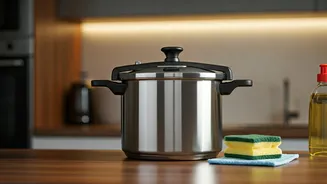







Why Clean Your Cooker?
Pressure cookers are kitchen workhorses, dramatically cutting cooking times by up to 70% through steam and pressure. This efficiency, however, comes with
inherent risks if the appliance isn't properly maintained. Clogged safety valves due to accumulated food particles can lead to catastrophic explosions, resulting in serious harm. While daily use highlights their convenience, deep cleaning at regular intervals is paramount. Beyond superficial cleanliness, internal components require attention to prevent blockages and ensure the sealing mechanism functions correctly. A recent incident involving a dietitian's mother's friend, where a pressure cooker exploded and injured a domestic worker, underscored the critical need for diligent cleaning, even in seemingly safe, modern appliances. Many users are unaware of the deeper cleaning required, focusing only on the exterior, which leaves the crucial internal parts vulnerable to dangerous obstructions.
Step 1: Whistle Valve Care
The first crucial step in maintaining your pressure cooker involves the whistle, the component responsible for releasing excess steam. It is recommended to clean the hole within the whistle using a fine pin every 4 to 5 days. This simple act ensures that pressure can escape freely, preventing dangerous build-ups inside the cooker. If this small opening becomes blocked with food debris, the appliance will not be able to regulate its internal pressure, significantly increasing the risk of an explosion. Regular, quick checks and cleaning of the whistle hole are fundamental to safe operation and can be done swiftly during your routine kitchen tasks, safeguarding against potential hazards.
Step 2: Gasket's Vital Role
Next, focus on the rubber gasket, a flexible ring that creates a seal between the lid and the pot. To clean it, carefully remove the gasket from the lid and wash it thoroughly with soapy water. Beyond washing, it's important to check its condition. If the gasket appears to have become loose or distorted, submerging it in ice water can sometimes help restore its shape and tightness. However, if you notice any cracks or significant wear on the gasket, it is imperative to replace it immediately. A compromised gasket will not form a proper seal, leading to steam leaks and inefficient cooking, and more importantly, potentially compromising the pressure regulation system and safety of the cooker.
Step 3: Safety Valve Area
The final, yet critically important, cleaning step addresses the safety valve area. This is a common spot where small particles of rice, lentils, and other food remnants tend to get lodged. These trapped particles can obstruct the valve's function, posing a severe safety risk. To effectively clean this area, use a small brush to meticulously dislodge and remove any debris. A thorough cleaning here ensures that the safety valve can operate unimpeded, allowing it to function as intended in emergency pressure release scenarios. Devoting just five minutes to this detailed cleaning can significantly contribute to preventing serious kitchen accidents and ensuring the longevity and safety of your pressure cooker.