
Fundamental Preservation Techniques
At their core, both pickles and achaars utilize the fundamental art of food preservation, a practice deeply rooted in history to extend the shelf life
of produce. This ancient technique generally involves the use of salt, acidity, or fermentation to inhibit spoilage. In this broad scientific sense, all achaars can indeed be classified as pickles. However, this overarching similarity belies the profound cultural and culinary divergence that exists between them. While the principle of preservation is common, the execution and resulting products are worlds apart, making the statement 'all achaars are pickles, but not all pickles are achaars' a more accurate reflection of their distinct identities.
Crafting the Brine vs. The Oil Infusion
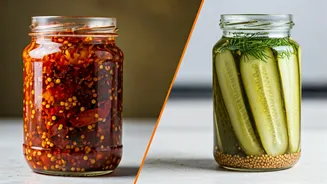
The divergence in preparation is a key differentiator. Conventional pickles, such as dill pickles or pickled onions, typically rely on a vinegar-based brine. This liquid concoction often includes salt, a touch of sugar, and mild aromatics like dill or mustard seeds, sometimes with a hint of fermentation. The primary goal here is swift preservation and achieving a clean, sharp, acidic taste. Achaar, in stark contrast, is often a more elaborate culinary undertaking. It involves a robust blend of potent spices like fenugreek, fennel, nigella, turmeric, and chili powder, frequently preserved in oil, most commonly mustard oil. The process can involve fermentation, but often relies on prolonged curing, utilizing sunlight, patience, and time to imbue the ingredients with depth. This method doesn't merely preserve but fundamentally transforms the food, creating a rich, nuanced final product.
A Symphony of Flavors
The resulting taste experiences are as distinct as their preparation methods. Classic pickles generally offer a tangy, sour, and sometimes subtly sweet flavor profile. Their purpose is often to provide a bright, clean counterpoint to richer or fried dishes, cutting through fattiness in sandwiches or burgers. Achaar, however, presents a much more complex and intense flavor explosion. It is characterized by a spicy, oily, and layered sourness, which can also carry notes of bitterness or pungency. An achaar is not just a side accompaniment; it's often a star component of a meal, capable of elevating a simple dish like dal and rice into a complete culinary experience. Its presence is crucial, adding a distinctive kick that can define the entire meal.
Health Perceptions and Usage
Considering the health aspect, pickles often present a lighter option. They tend to be low in calories due to minimal oil content and can be beneficial for gut health thanks to fermentation, making them a perceived diet-friendly choice. Achaars, on the other hand, are considerably richer, typically laden with oil and a potent mix of spices, leading to a higher calorie count. However, it's important to note that achaars are not intended for large consumption. Their potent flavor means a small amount is sufficient to enhance a meal, thus moderating their caloric impact. Ultimately, while both are preserved foods, they serve very different roles on the palate and in our meals.