





Navigation Woes on Mars
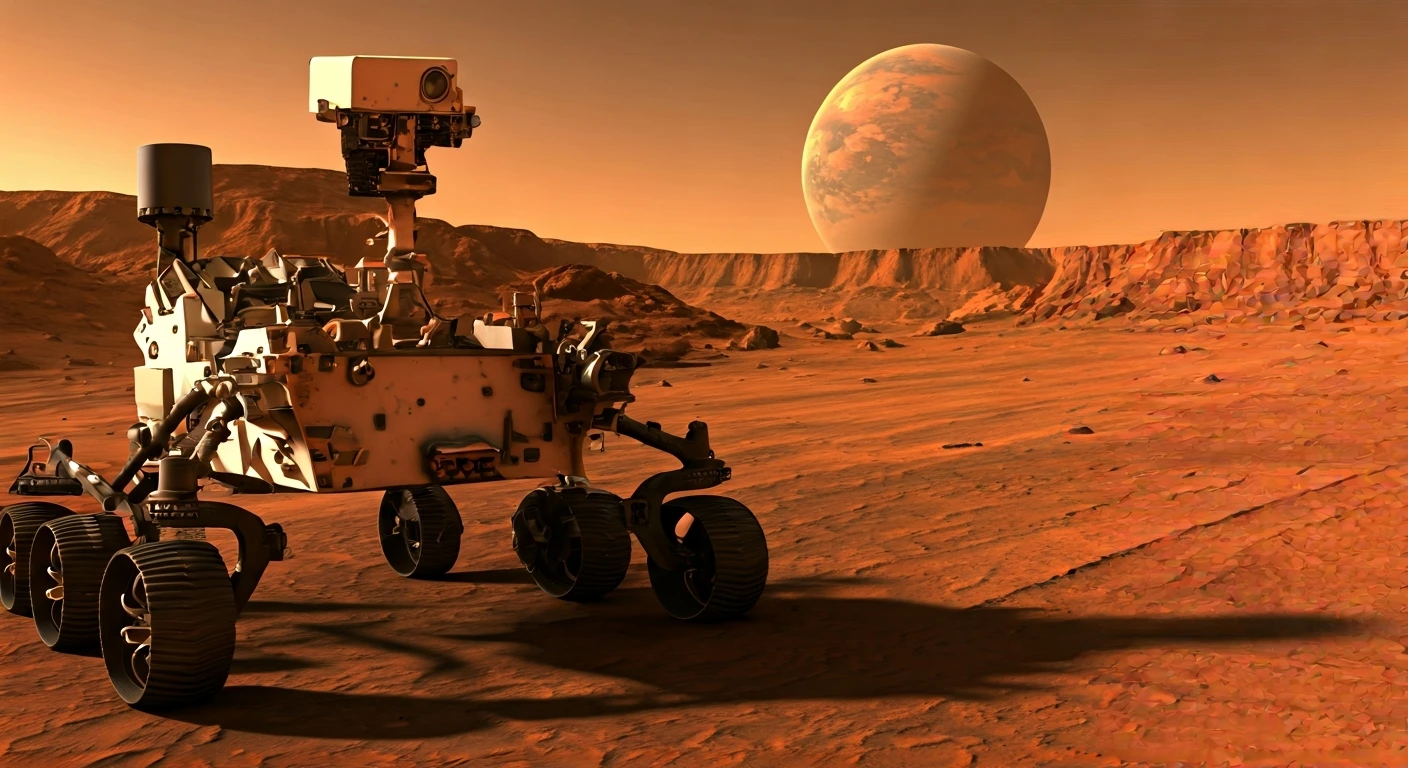
The Perseverance rover encountered significant hurdles with its autonomous navigation system on Mars, necessitating frequent guidance from Earth for precise
positioning. While the rover could estimate its general vicinity, it relied on human controllers to steer clear of hazardous terrain. This dependence, despite the average 24-minute communication delay for a round trip of information, severely limited the rover's ability to traverse large distances independently. Although its mission to explore the Martian surface continued, its autonomous range was dramatically curtailed, as it could only 'phone home' once daily to ascertain its exact coordinates, a critical bottleneck for its ambitious scientific objectives.
Ingenious Repurposing Solution
To overcome these navigation limitations, NASA engineers devised a brilliant strategy. They decided to harness the unused processing power of a Qualcomm Snapdragon 801 SoC found within the Perseverance Helicopter Base Station. This chip, which was originally employed for communication between the rover and the helicopter, became idle after the chopper's mission concluded in 2024. The ingenious idea was to repurpose this dormant chip to provide Perseverance with highly accurate location data, achieving precision down to approximately 10 inches. This innovative approach sidestepped the need for a complex satellite constellation, akin to Earth's GPS, by utilizing existing onboard resources in an entirely novel way.
Mars Global Localization Unveiled
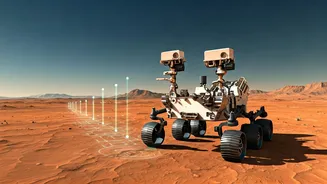
The repurposed chip enables a groundbreaking technology NASA calls Mars Global Localization. The rover now captures panoramic images of its surroundings and feeds this visual data to the SoC. The chip then processes these images, transforming them into a bird's-eye view. This generated map is subsequently compared with high-resolution satellite imagery of the Martian surface, obtained from orbiting spacecraft. By meticulously matching the rover's 360-degree panorama with these overhead views, Perseverance can now accurately determine its exact position on the planet's surface. This sophisticated system effectively acts as a substitute for GPS, but without the dependency on a network of 24 satellites, offering a more self-sufficient navigation solution for Martian exploration.
Empowering Future Exploration
This technological advancement is akin to equipping the rover with its own GPS system, as stated by Vandi Verma from NASA's Jet Propulsion Laboratory. The ability for Perseverance to autonomously pinpoint its location means it can now undertake much longer drives without human intervention, significantly expanding the scope of scientific exploration on Mars. This newfound autonomy will allow the rover to cover more ground, gather more data, and potentially uncover new insights into the planet's history and geology. Furthermore, the adaptability of this Mars Global Localization system suggests it could be readily implemented for future rovers designed for high-speed and long-distance traverses across the Martian terrain, enhancing the overall efficiency and reach of robotic exploration efforts.
Remote Engineering Marvel
Successfully reprogramming a spacecraft from hundreds of millions of miles away is an astounding engineering feat, even for NASA, which has a long history of operating at planetary distances. This particular instance highlights the immense challenge and ingenuity involved in remote space operations. As a testament to their capabilities, NASA engineers previously faced a similar challenge with the Voyager 1 spacecraft, launched in 1977. When a memory module failed after over 45 years in deep space, they devised a method to continue operating the probe remotely. As of late 2025, Voyager 1 has reached a distance of one light-day from Earth, meaning it takes 24 hours for commands to reach it and another 24 hours for a response to return, making it the most distant human-made object ever launched, showcasing remarkable resilience and remote engineering prowess.