





Nature's Influence On Mood
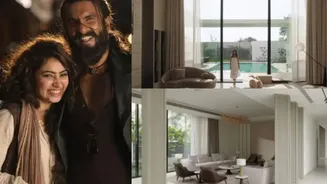
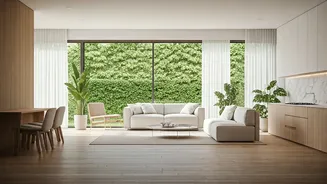
The deliberate integration of natural light and seamless indoor-outdoor connections within 'Ananda' significantly impacts mood and stress levels. As highlighted
by experts, sunlight is crucial not only for vitamin D production, which is directly linked to mood enhancement and the reduction of depressive symptoms, but also for regulating our internal body clocks. This regulation aids in better sleep patterns and consequently lowers stress. When living spaces are designed to open into courtyards or gardens, the brain is signaled to move away from a state of constant vigilance, tapping into an innate human need for nature. This connection actively reduces cortisol levels, promoting a profound sense of calm and security. Even indirect visual access to greenery has been shown to sharpen focus, stimulate creativity, and improve emotional regulation, demonstrating the powerful psychological benefits of nature-infused architecture that fosters a feeling of being present and restored.
Minimalist Spaces, Maximum Clarity
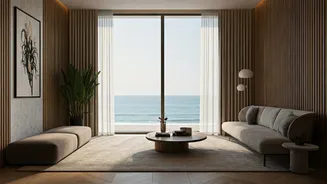
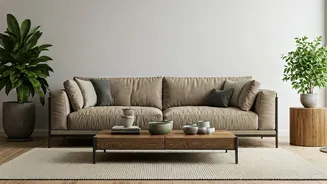
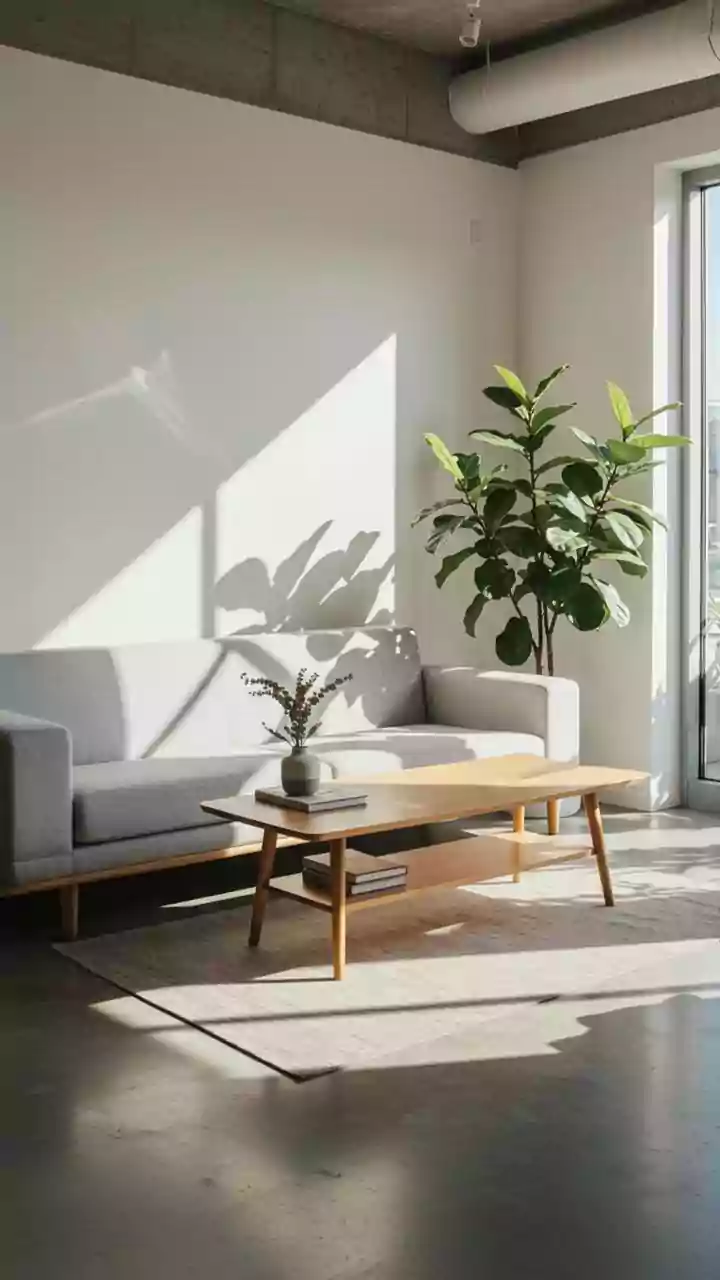
Neutral color palettes and pared-down decor in 'Ananda' are intentionally employed to minimize visual clutter, providing the brain with much-needed respite. This reduction in sensory input allows for decreased cognitive load, which in turn enhances concentration, improves decision-making capabilities, and promotes mental clarity. When environments are less visually demanding, the mind feels less overwhelmed and more in command. Complementing this, the open-plan layouts within the villa foster a sense of psychological freedom. This easy flow of space communicates safety to the nervous system, contributing to stress reduction and encouraging relaxation. Furthermore, such designs facilitate better movement throughout the home, more effective distribution of natural light, and potentially more harmonious social interactions, all of which collectively contribute to emotional ease and a greater capacity to remain present in the moment.
Balancing Openness and Warmth
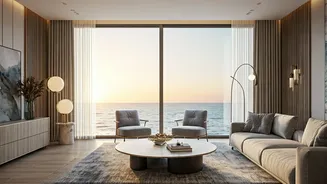
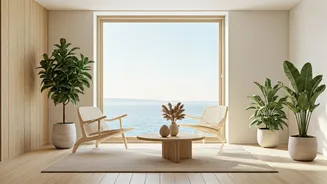
While the expansive nature of 'Ananda,' with its high ceilings and large windows, offers a sense of freedom, it's crucial to achieve a psychological equilibrium between openness and a feeling of security. An overabundance of open space can sometimes lead to feelings of exposure rather than relaxation, potentially increasing subtle anxiety and hindering the ability to fully unwind. To counteract this, the design strategically incorporates elements that foster warmth and a sense of 'refuge.' This is achieved through thoughtful zoning of areas using elements like area rugs, softer ambient lighting, and carefully arranged furniture groupings, which provide structure within the open layout. Incorporating natural textures such as wood and fabric, along with warmer color undertones, imbues the spaces with emotional comfort, making them feel more lived-in and inviting. The addition of personal touches—like photographs or cherished objects—further anchors identity and fosters a deep sense of connection to the space.