




Moon's Dancing Act
The moon, our closest celestial neighbor, will be a primary focus in early 2026. The waxing crescent moon will be visible after dark on January 20th and
22nd. A waning crescent moon will grace the pre-dawn sky on January 16th and 14th. Furthermore, a young crescent moon can be seen on January 19th. The interplay of the moon with other celestial bodies like Saturn, the Pleiades, and Regulus will provide stunning visual treats. The first quarter moon will appear on January 25th, and the full 'Wolf Moon' will rise on January 3rd, offering fantastic viewing opportunities.
Planetary Positions
Planets will also play key roles in the early 2026 night sky. Jupiter will be at opposition on January 10th. The waxing moon will glow beside mighty Jupiter in the winter sky during these times. On December 20th, Jupiter can be observed as the 'Christmas Star,' adding a festive touch to the astronomical events. Saturn will also be a star, with the waxing crescent moon waving goodbye on January 23rd, and the moon's near conjunction on January 21st. These planetary placements will make for amazing viewing experiences.
Constellations Unveiled
Constellations will be another major highlight for skywatchers. The Winter Hexagon will be visible after dark on January 12th. The Ursa Major constellation will rise on January 17th. The Taurus constellation will also make an appearance on January 7th. On January 29th, Cassiopeia will be visible. The appearance of these constellations will offer viewers the chance to familiarize themselves with the patterns in the night sky. The Orion's Sword will light up the sky on December 18th and Orion's red and blue stars will be visible on January 26th. Also, Ursa Minor will appear on December 29th.
Meteor Shower Peaks
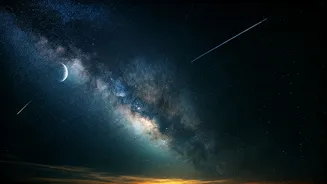
The Quadrantid meteor shower will peak in the early hours of January 4th. These events will offer opportunities to witness 'shooting stars' as they streak across the night sky. Be sure to find a dark viewing spot and look up to enjoy the celestial show. These meteor showers add to the wonder of the astronomical events, providing a unique spectacle for those who take the time to observe the skies.
Other Stellar Events
Several other celestial events will fill up the night sky. The moon will approach the Pleiades on December 30th and then it'll be nearer to them on January 27th. The moon will be close to the Bull’s Horns on January 28th. The 'Snow Moon' will rise with Regulus on February 1st. In addition to these events, viewers will find January to be full of activity. These events will make early 2026 a particularly fascinating time for stargazing.