
The Lunar Connection
NASA has embarked on a fascinating journey to the Moon, not just for exploration, but to unravel the mysteries of Earth's water. The prevailing theory
suggests that water on Earth might have originated from asteroids or comets. NASA's research is predicated on the possibility that the Moon's geological composition and the presence of water ice in permanently shadowed craters could hold clues to the source of Earth's water. By examining lunar samples and analyzing the Moon's environment, scientists are gathering data that could validate or challenge existing theories about how water arrived on our planet. This unique approach utilizes the Moon as a valuable laboratory for understanding Earth's history and the fundamental building blocks of life. NASA's exploration also involves analyzing the lunar regolith, the loose surface material, to identify traces of water molecules and trace elements that can reveal the origin of water.
Water's Journey
Understanding the journey of water, from its potential extraterrestrial origins to its present-day distribution on Earth, is a primary focus of NASA's lunar research. The agency's efforts extend beyond simply detecting water on the Moon; they encompass a detailed study of the composition, distribution, and behavior of lunar water. The examination of lunar ice reveals essential information about the building blocks of the solar system. The data gathered provides crucial insights into the processes that led to the formation of Earth's oceans, and the possible role of celestial bodies in bringing water to our planet. The Moon acts as a time capsule, preserving a record of events that occurred billions of years ago. Studying the Moon also provides insights into how water interacts with rocks and other materials in extreme environments. This knowledge is important for understanding the potential for water on other planets and moons in our solar system.
Innovative Techniques Evolved
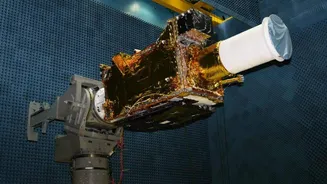
NASA's approach to studying the Moon involves various innovative techniques and advanced technologies. This includes sophisticated remote sensing instruments, such as spectrometers and radar, which can detect the presence of water ice in permanently shadowed craters. Moreover, NASA is using lunar rovers and landers to gather samples of the lunar surface. These samples are analyzed using advanced analytical tools that can provide information about the water's isotopic composition, its origin, and its history. NASA's innovative techniques also include the use of computer simulations and modeling to better understand the behavior of water on the Moon. These simulations help scientists predict how water ice may be affected by temperature changes, solar radiation, and other environmental factors. By combining these advanced methods, NASA aims to paint a comprehensive picture of the lunar water cycle and its connection to the story of water on Earth. In the end, the technological advancement is an asset to understanding water on Earth.
Future Discoveries Expected
The findings from NASA's Moon mission have the potential to rewrite our understanding of Earth's water. The knowledge gained from these studies could reshape our models of how our planet was formed and how life originated. Also, NASA's work may uncover new sources of water on the Moon. Such discoveries could have implications for future lunar exploration and the establishment of sustainable human settlements. The findings will provide essential data about the solar system's evolution. As NASA continues to explore the Moon, new questions may arise. These inquiries will encourage scientists to push the boundaries of knowledge even further. The research on the Moon might influence the development of sustainable water management practices and the search for water resources on other planets. This ongoing mission illustrates NASA's commitment to advancing scientific knowledge and its contribution to the search for life beyond Earth.