


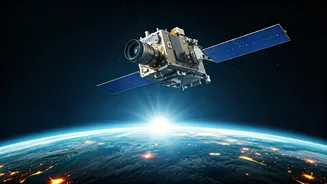

Orbital Logistics on the Horizon
The U.S. Space Force is actively preparing to showcase advanced in-space capabilities through a series of missions slated for 2027. The primary focus is on two
distinct demonstrations: one centered on refueling satellites while they are in orbit, and another to prove the viability of a servicing spacecraft docking with and repositioning another satellite. These missions are part of a broader strategy to develop what military leaders term 'servicing, mobility, and logistics' technologies. The overarching goal is to imbue spacecraft with greater maneuverability and survivability, drawing parallels to how aircraft and ships are serviced and resupplied in terrestrial military operations. This strategic shift reflects an increasing recognition of the need for dynamic and adaptable assets in the space domain. The sustainability of these services on a commercial scale remains a key question being explored. Officials have been engaged in extensive study over the past three years to understand the potential market for orbital logistics services. Collaboration with industry partners has been crucial to assess current capabilities, future visions, and the underlying business case for these emerging technologies. The ultimate aim is to discern whether these vital services will be predominantly driven by commercial enterprises or if governmental leadership will be essential in their development and deployment.
Fueling Up in Space
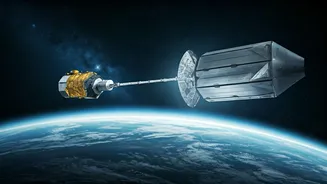
One of the pivotal demonstrations planned is the first-ever commercial in-space refueling of a U.S. Space Force asset. This mission involves Astroscale U.S.'s 'Provisioner' spacecraft, a vehicle weighing approximately 300 kilograms, equipped with a specialized hydrazine tank designed for transferring fuel to satellites currently operating in orbit. The development of Provisioner was supported by a significant Space Force agreement in September 2023, which allocated $25.5 million in government funding, complemented by roughly $12 million from Astroscale. The Provisioner spacecraft is set to refuel two client satellites, designated Tetra-5, which are themselves under development by the Air Force Research Laboratory. Following the refueling of the Tetra-5 satellites, the servicing vehicle will then return to an Orbit Fab propellant depot to replenish its own fuel supply. This depot is integrated into an Impulse Space hosting platform and was developed under a $13.3 million contract awarded to Orbit Fab by the Defense Innovation Unit in 2022. The planned sequence involves the servicer initially docking with and refueling the first Tetra-5 satellite, then proceeding to the depot for more propellant before returning to refuel the second Tetra-5 satellite. This intricate process aims to validate the operational architecture for such in-orbit refueling operations.
Augmented Maneuverability Demo
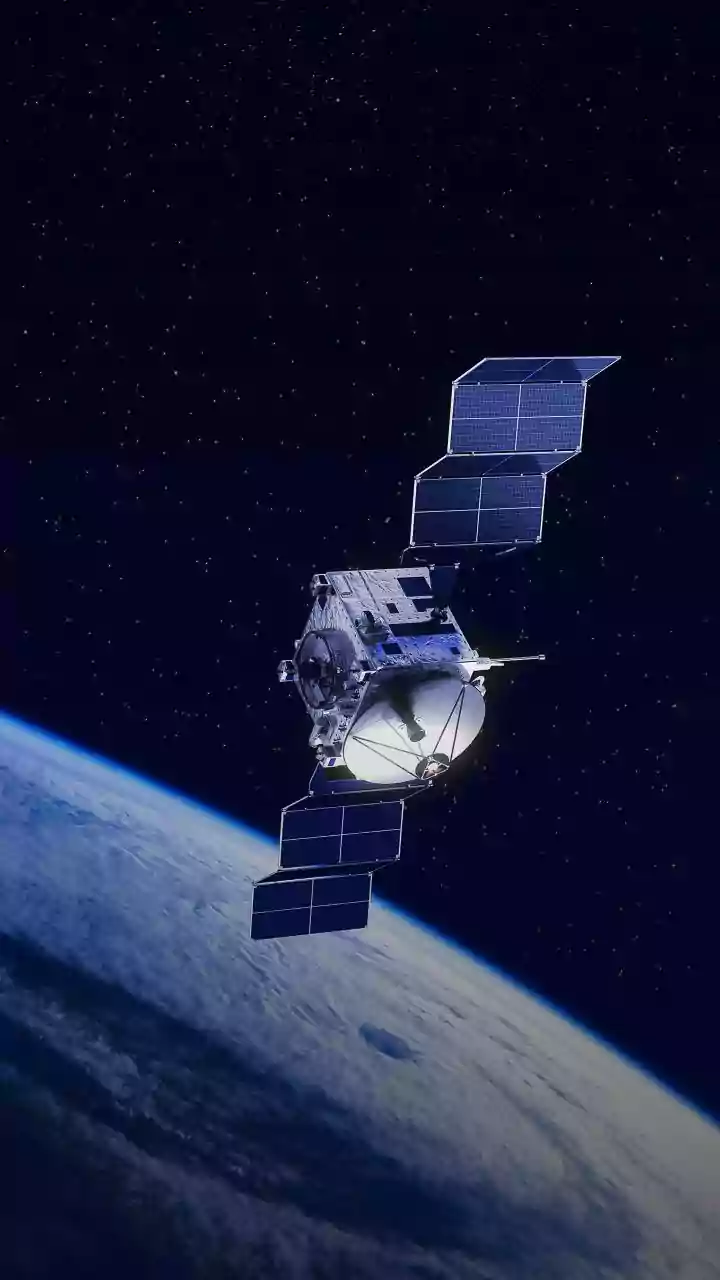
Alongside the refueling demonstration, the USSF-23 mission also incorporates a distinct experiment focused on satellite servicing and mobility. This experiment features Starfish Space's 'Otter' servicing vehicle, a compact, autonomous spacecraft engineered to dock with and maneuver existing satellites in orbit. A key capability of the Otter is its design to attach to 'unprepared' satellites, meaning those not originally built with servicing interfaces. The Space Force intends to leverage this vehicle to test a concept termed 'augmented maneuver.' This involves essentially bestowing propulsion and mobility capabilities onto satellites that might possess limited onboard fuel or maneuvering capacity. This demonstration is projected to last for two years and will involve docking with a non-operational satellite that will subsequently be relocated to a disposable orbit. Colonel Scott Carstetter indicated that if this initial test proves successful, the underlying technology could later be applied to extend the operational life of active spacecraft. A substantial $37.5 million contract was awarded to Starfish for this demonstration in May 2024, operating under a cost-sharing agreement that includes approximately $30 million in private investment. Furthermore, earlier in 2024, the Space Force provided Starfish with an additional $54.5 million contract for an operational mission, funded through the Pentagon's APFIT initiative, which is designed to accelerate the acquisition of innovative technologies. This operational mission, anticipated for a 2028 launch, will involve augmented maneuver operations for multiple satellites.
Leveraging Commercial Partnerships
Beyond funding its own demonstration missions, the Space Force is actively planning to utilize commercial servicing systems. One such system is the Mission Robotic Vehicle (MRV), a project developed by Northrop Grumman in collaboration with DARPA. The MRV is engineered to dock with satellites in geostationary orbit and extend their operational lifespans using advanced robotic arms developed by the U.S. Naval Research Laboratory. Following the MRV's launch, which is scheduled for this summer, the Space Force intends to establish contractual agreements to access its services should the need arise. Colonel Carstetter confirmed that the Space Force will be among the 'customer partners' for the DARPA MRV vehicle once it becomes operational. This arrangement will allow the Space Force to facilitate service requests for other users, directing them through Northrop Grumman for execution. This approach underscores a strategic reliance on and integration of commercial capabilities to meet evolving space operational requirements, aiming to ensure robust support for critical space assets.
Expanding the Supplier Ecosystem
The Space Force is also making concerted efforts to cultivate and broaden the landscape of suppliers involved in orbital logistics. To this end, the service is supporting a new $20 million initiative from SpaceWERX, known as the In-Domain Orbital Logistics Challenge. This program is set to issue an open solicitation this summer, inviting proposals for Small Business Innovation Research (SBIR). The rationale behind this endeavor is rooted in the increasingly complex strategic environment in space, which necessitates the development of in-domain logistics capabilities. Such capabilities would provide essential services like bulk and retail propellant, spare parts, inspection, and repair at forward orbital locations, thereby supporting agile in-space maneuver warfare. The challenge is anticipated to encompass a range of activities, including design sprints, tabletop exercises, and prototype demonstrations, all aimed at fostering innovation and identifying promising new technologies and providers within the orbital logistics sector.