





Banarasi Brocade's Elegance
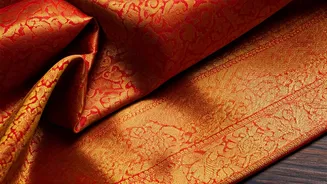
Banarasi brocade, an opulent silk fabric crafted in Varanasi, stands as a prime example of Indian weaving prowess. These textiles are known for their luxurious
feel and elaborate designs, typically featuring gold and silver threads known as 'zari'. The weaving process often involves brocading, which adds supplemental weft threads to create complex patterns. The motifs range from floral and geometric designs to depictions of nature and historical figures. Skilled artisans meticulously work with multiple threads to produce the fabric's rich texture and intricate detailing. Historically, Banarasi brocade was a symbol of status and wealth, often worn by royalty and the elite, and it continues to be a staple in Indian weddings and celebrations. Each piece reflects centuries of tradition, skill, and artistry passed down through generations of weavers. The fabric's grandeur is not just in its appearance but also in the laborious process required to create it, making it a treasured symbol of cultural heritage.
Ikat Weaving's Magic
Ikat weaving, practiced in various regions across India, is characterized by its distinctive dyeing technique that creates blurred patterns. The process involves tightly binding specific sections of the warp or weft threads before dyeing them, and it is usually done with multiple dye baths to achieve complex designs. When the threads are woven, the dyed areas align to form intricate motifs that appear slightly softened, creating the iconic ikat aesthetic. The method may vary slightly depending on the region, with each place having its own distinct patterns and style. Pochampally ikat, famous for its geometric designs and vivid color combinations, hails from Telangana and showcases the unique capabilities of this dyeing process. This art form embodies the weavers' skill and precision, making each piece a unique expression of India's weaving heritage and demonstrating how the interplay of color and design tells a story.
Pochampally Ikat's Vibrance
Pochampally ikat, originating from the Bhoodan Pochampally region of Telangana, is renowned for its geometric patterns and bright, eye-catching colors. This weaving style uses the ikat technique, where both warp and weft threads are dyed before weaving, ensuring an almost equal distribution of color and pattern throughout the textile. The designs often feature complex geometric shapes, floral motifs, and abstract patterns, each reflecting the skill and artistry of the local weavers. Pochampally textiles are cherished for their durability and striking visual appeal. The traditional weaving of Pochampally ikat is a family affair in many households, and the art is passed down from one generation to the next. The bright colors and intricate patterns of Pochampally ikat are not only visually appealing but also carry a cultural significance, reflecting the traditions and creativity of the local community. It showcases the harmonious balance between art, tradition, and community spirit.
Kanchipuram Silk's Splendor
Kanchipuram silk, originating from the Kanchipuram region of Tamil Nadu, is celebrated for its luxurious quality and elaborate designs. These silk sarees are recognized for their vibrant colors, rich textures, and intricate patterns, often featuring gold zari work. The weaving process involves using silk threads sourced from South India, which are then woven on traditional handlooms. The designs can vary from traditional motifs like temple borders and floral patterns to contemporary designs that cater to modern tastes. The sarees are known for their wide borders, intricate pallus, and stunning color combinations, making them a popular choice for weddings and special occasions. The Kanchipuram silk weaving tradition has been around for centuries, with each saree reflecting the dedication, time, and craftsmanship of the weavers. The beauty of these textiles reflects cultural pride and the artistic talent of the Kanchipuram weavers, who continue to preserve and evolve this timeless art form.
Jamdani Weaving's Delicacy
Jamdani weaving is a labor-intensive technique producing finely woven muslin fabrics. It is characterized by the use of supplementary weft threads, which create delicate, floating patterns on a sheer background. Each motif is woven by hand, which is often considered a painstaking process. The result is a lightweight fabric with intricate designs that seem to float on the surface. Historically, Jamdani was favored by royalty and the elite, celebrated for its elegance and sophistication. The weaving tradition has deep roots in the Indian subcontinent, with specific regional variations existing. Jamdani textiles are valued not only for their beauty but also for their breathability, making them suitable for the warmer climate. The designs often include floral patterns, geometric motifs, and figures, with each textile reflecting the skill of the weaver and the region's cultural heritage. The tradition demonstrates a remarkable fusion of artistry and technical mastery, creating fabrics that are both exquisite and enduring.
Chanderi Weaving's Grace
Chanderi weaving, originating from the town of Chanderi in Madhya Pradesh, is known for its sheer texture, fine silk, and metallic thread work. Chanderi textiles are crafted using handlooms, and they are typically characterized by lightweight fabrics with delicate motifs. The traditional designs often incorporate gold and silver zari, creating a shimmering effect. The use of fine silk and cotton yarns adds to the fabric's softness and drape. The patterns frequently feature a variety of motifs, including peacocks, flowers, and geometric designs. Chanderi saris and other textiles are celebrated for their elegance and simplicity, making them suitable for both casual and formal occasions. This weaving tradition represents a unique blend of artistry and craftsmanship, reflecting the cultural heritage of the region. The ethereal quality of Chanderi fabrics makes them highly sought-after. It beautifully showcases a timeless aesthetic, representing a seamless blend of tradition and elegance.
Patola Weaving's Richness
Patola weaving, originating from Gujarat, India, is one of the most intricate and elaborate textile traditions. Patola textiles are characterized by double ikat weaving, where both warp and weft threads are dyed before weaving, ensuring the pattern appears identical on both sides of the fabric. The process is remarkably complex and time-consuming, requiring highly skilled artisans. These textiles are known for their geometric and floral patterns, and their vivid colors. They often feature complex designs that include a variety of motifs, such as elephants, parrots, and dancing figures. Patola saris were traditionally worn by royal families and are highly valued for their luxurious appearance and historical significance. The patterns are meticulously planned and executed, with each thread contributing to the overall design. Patola weaving is a testament to the skill and dedication of the weavers and reflects the rich cultural heritage of Gujarat. It is a symbol of status and cultural identity, showcasing a rare blend of artistic skill and intricate craftsmanship.
Bhujodi Weaving's Variety
Bhujodi weaving, originating from the Kutch district of Gujarat, is a versatile and vibrant textile tradition. Bhujodi textiles are known for their use of various materials, including cotton and wool, and their diverse designs. The weavers incorporate complex geometric patterns, as well as stylized representations of animals and plants. Bhujodi weaving is characterized by its bold colors and intricate detailing. The process uses traditional handlooms, and it has evolved to include both traditional and contemporary designs. Bhujodi textiles are a symbol of the creative spirit of the local communities and are popular for their unique aesthetic and cultural value. The craft reflects the identity and artistic traditions of the local communities and is still practiced with dedication. It showcases the region's rich cultural tapestry and provides a platform for local artisans to share their unique skills and creativity. Its distinctiveness comes from the intricate combination of color and pattern that it weaves.
Muga Silk Weaving's Sheen
Muga silk weaving, practiced in Assam, is renowned for producing one of the finest and most durable silks. Muga silk is naturally golden yellow and has a characteristic luster that improves with each wash. The silk is produced by silkworms that feed on the leaves of the Som plant. The weaving process involves intricate techniques, often incorporating traditional motifs like animals, birds, and flowers. Muga silk textiles are known for their elegance, durability, and natural golden color, making them highly sought-after for various applications, including traditional attire and ceremonial wear. The art is passed down through generations, ensuring the preservation of techniques and artistic styles. Muga silk weaving is an integral part of Assamese culture, representing the region's artistic excellence and cultural heritage. The textiles are admired for their luster and longevity, signifying the dedication of the weavers and the unique qualities of the silk.