


The Time Trap
The most significant error visitors make when planning a trip to Yellowstone National Park is underestimating the time required to truly appreciate its
immense scale and diverse attractions. Established in 1872, this pioneering national park sprawls across an astounding 2.2 million acres, extending into Wyoming, Montana, and Idaho. This vast expanse encompasses over 10,000 geothermal marvels, a rich tapestry of 67 mammal species, nearly 300 types of birds, and 12 varieties of fish. The park's extensive road network alone spans 392 miles of paved surfaces, weaving through dense lodgepole pine forests. To put its size into perspective, Yellowstone is larger than both Delaware and Rhode Island combined. A simple drive-through during the summer peak can easily consume two hours, and this doesn't account for the myriad of activities available, such as hiking scenic trails, fishing in pristine waters, enjoying picnics amidst breathtaking scenery, or simply marveling at dramatic waterfalls, towering mountain peaks, and spectacular geyser eruptions. Allowing ample days is crucial to avoid feeling rushed and to truly absorb the park's natural splendor and unique phenomena.
Visitor Hubs & Wildlife Encounters
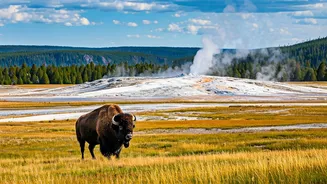
Yellowstone is equipped with 10 visitor centers, serving as vital hubs for information, resources, and orientation. These centers offer more than just maps and general park insights; they house gift shops, provide crucial details on estimated geyser eruption times, offer the assistance of park rangers for personalized itinerary planning, and feature educational books and films. They are also the place to secure backcountry permits for those venturing into more remote areas. Beyond the visitor centers, the park's wildlife presents a unique aspect of the travel experience, often leading to the phenomenon known as a 'bison jam.' It is imperative to remember that animals always have the right of way within national parks. Large bison herds frequently meander along park roads, causing traffic to slow or halt. This offers a safe and legal opportunity to observe these magnificent creatures without venturing too close on foot. Similarly, elk, particularly in the Mammoth area from early September to mid-October during the rut, can cause traffic disruptions or detours as bull elk protect their harems. Rangers are often present to guide pedestrians safely and ensure visitors maintain a respectful distance from these powerful animals.
Seasonal Challenges & Proximity
Visiting Yellowstone presents different experiences and challenges depending on the season. During winter, numerous park roads become impassable due to heavy snowfall, which averages 150 inches annually and can double at higher elevations. While the main park road typically remains open, some routes are accessible only via snowmobiles or specialized snowcoaches, vehicles designed to navigate deep snow. This winter weather also impacts road infrastructure, leading to extensive construction projects during the summer months. Consequently, travelers should anticipate potential delays due to road work during their warmer-season visits. Another compelling reason to dedicate more time to Yellowstone is its close proximity to another national treasure, Grand Teton National Park. The drive from Yellowstone's south entrance to Grand Teton's north entrance is a mere eight miles along the John D. Rockefeller, Jr. Memorial Parkway, allowing for a seamless extension of your exploration to include this spectacular neighboring park. Planning for these seasonal considerations and the opportunity for dual-park visits is key to a well-rounded experience.
Strategic Planning & Viewing
To truly make the most of your Yellowstone adventure, consider a minimum three-day stay. The park's primary road system is structured into two distinct loops, the north and south, each warranting at least a full day of exploration. Embrace potential delays caused by wildlife encounters, viewing them as an integral part of the Yellowstone experience rather than an inconvenience. Drivers should exercise caution, and passengers can help spot animals hidden in the roadside vegetation without stopping or obstructing traffic. Yellowstone offers five distinct entrances, and strategic selection can enhance wildlife viewing opportunities. Entering through the northeast entrance provides access to Lamar Valley, an excellent location for observing bison herds, especially in May and June when calves are abundant, and again in late July and August during the mating season. Due to the area's limited shade, early morning or late evening sightings are most probable as the animals tend to avoid the midday heat. The north entrance, marked by the historic Roosevelt Arch, is another significant entry point, offering a grand introduction to the park.