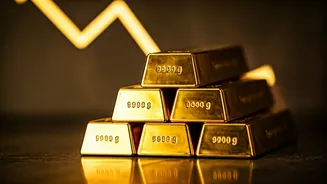

Dollar's Downturn Explained
The dollar's depreciation can be attributed to several factors, mainly linked to the actions of the Federal Reserve (the Fed) and the overall economic
landscape. When the Fed signals a potential shift in monetary policy, like interest rate cuts, it often leads to a weaker dollar. Investors react to expectations of lower returns by selling off the currency. In essence, lower interest rates make a currency less attractive, as it yields a smaller return compared to currencies with higher rates. This situation, combined with other economic factors, results in the dollar's value diminishing on global markets. Market reactions often reflect a consensus view among investors regarding the future direction of the economy.
Gold's Ascent to Record
Gold, often regarded as a safe-haven asset, thrives during times of economic uncertainty and in periods where the dollar weakens. As the dollar’s value decreases, the price of gold, which is typically priced in dollars, becomes relatively more affordable for investors holding other currencies. This increased demand drives up the price of gold. Furthermore, if markets anticipate inflation or further economic instability, gold becomes even more attractive as a hedge against these risks. Essentially, gold's value rises due to a combination of currency dynamics and investors seeking safer, inflation-resistant assets in the face of economic volatility.
Market's Expectations & Cuts
The financial markets are actively pricing in the possibility of the Federal Reserve enacting more interest rate cuts this year, reflecting their expectations about the economic environment. Fed funds futures, which are financial contracts that predict future interest rate levels, have added about three basis points, signifying the anticipation of an increase in the number of rate cuts. Though three basis points seems to be a tiny number, the addition suggests a degree of pressure on the Fed to potentially adopt a more aggressive easing stance. This expectation of further monetary easing influences market behavior, reinforcing trends like the dollar's decline and gold's rise.