




Artemis 3: Earth Orbit Stepping Stone
NASA has recently provided updated details regarding its Artemis 3 mission, a crewed flight intended to refine rendezvous and docking capabilities with
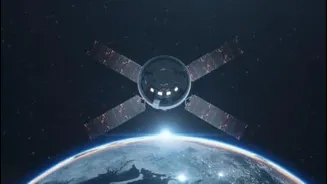
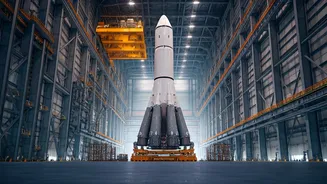
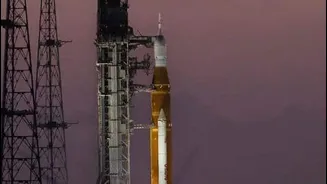
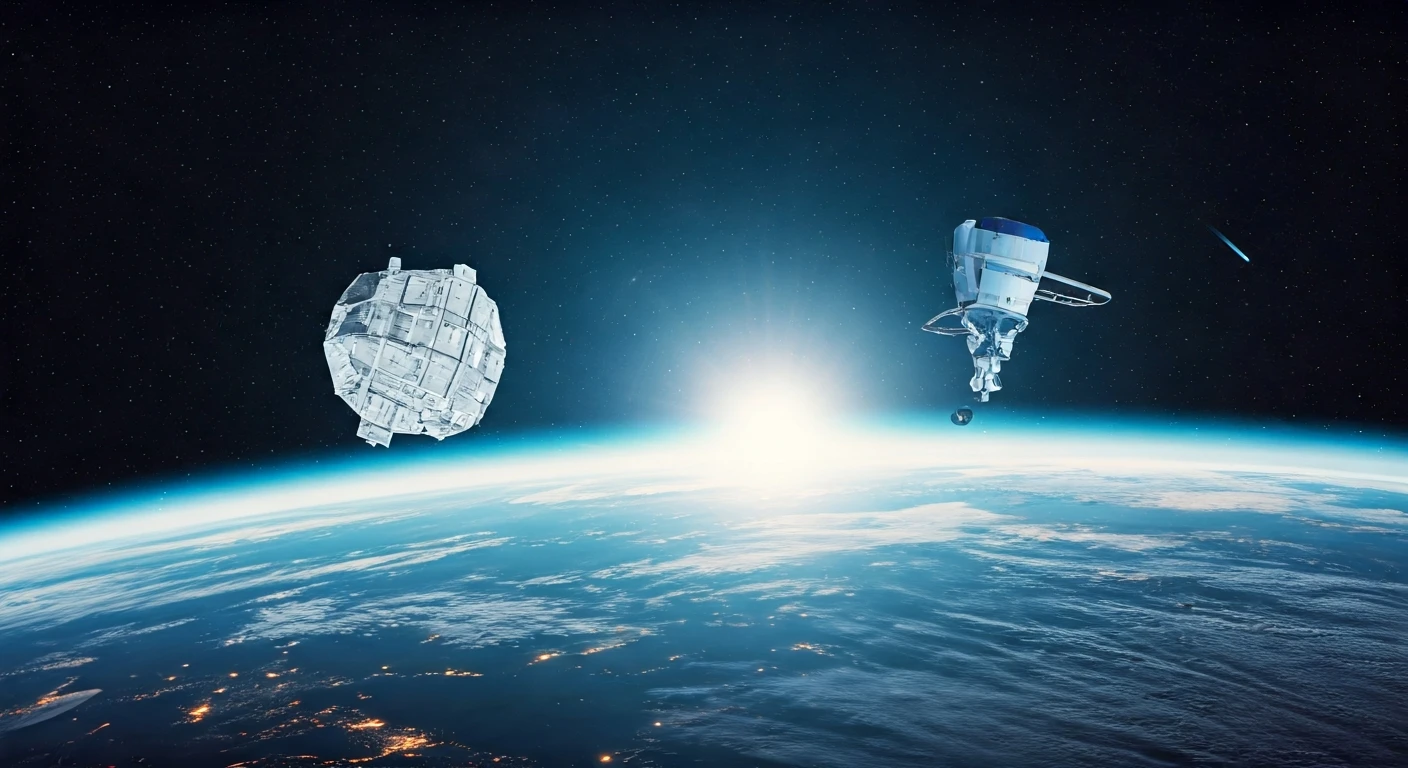
lunar lander prototypes situated in Earth's orbit. This mission, while not a lunar landing itself, is designated as a critical precursor for the more ambitious Artemis 4 mission, which aims to land astronauts on the Moon. Officials have emphasized the complex nature of Artemis 3, labeling it as one of NASA's most intricate undertakings. The fundamental plan involves utilizing the Space Launch System (SLS) rocket to transport four astronauts into orbit aboard the Orion spacecraft. Subsequently, Orion is slated to perform rendezvous and docking maneuvers with one or both of the privately developed lunar landers: SpaceX's Starship and Blue Origin's Blue Moon. This updated mission architecture represents a significant shift from earlier concepts that envisioned Artemis 3 as the mission to place astronauts near the Moon's south pole. While specific mission details are still being finalized, these recent announcements highlight NASA's progress in defining the mission's objectives and operations.
Enhanced Orion Duration and Spacer Stage
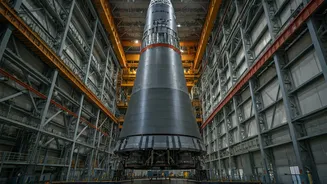
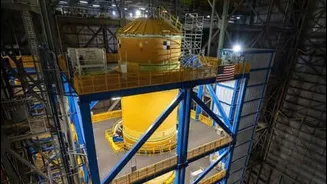
A key development for Artemis 3 is the planned extended duration for astronauts aboard the Orion spacecraft. This will allow for more comprehensive evaluation of the life support systems, building upon the experiences from Artemis 2, which lasted approximately 10 days. Unlike Artemis 2's lunar flyby, Artemis 3's operational theater will be low Earth orbit. To facilitate this, the Artemis 3 SLS rocket will be equipped with a non-functional 'spacer' component instead of a full upper stage. This spacer will replicate the physical dimensions and connection points of the actual upper stage between the Orion stage adapter and the launch vehicle stage adapter. This strategic substitution is expected to contribute to cost savings, as the primary function of the full upper stage—propelling Orion out of Earth orbit towards the Moon—is not required for an Earth-orbiting mission. Following the SLS's delivery of Orion into Earth orbit, the spacecraft's European-built service module will then handle the necessary propulsion to achieve a circular orbit around Earth.
Lander Prototypes and Open Questions
The Artemis 3 mission is set to explore rendezvous and docking operations with Pathfinder versions of two privately developed human landing systems: SpaceX's Starship and Blue Origin's Blue Moon. This operational setup in low Earth orbit offers increased mission success probability by providing more launch windows for all participating elements, including the SLS-launched Orion and the lander prototypes. While the mission's trajectory in low Earth orbit has been confirmed, several crucial aspects remain to be clarified. These include the specific duration of the Artemis 3 mission, the selection of astronauts who will participate, potential scientific experiments to be conducted, and the procedures for testing the new Artemis spacesuits, which are being developed by Axiom Space. Furthermore, NASA is actively seeking industry input on solutions to enhance communication with the ground, as the Deep Space Network will not be utilized for this particular mission. There is also an ongoing assessment of interest, both domestically and internationally, in deploying CubeSats during the mission.