


More Than Just a Snack
Ram Laddu transcends its identity as a mere street food; it’s a cultural emblem nestled within the bustling arteries of Delhi. This unassuming fritter,
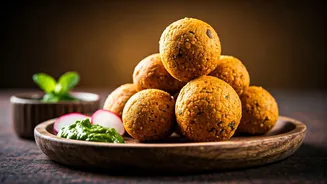
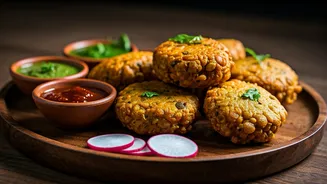
crafted primarily from ground chana dal, offers a delightful contrast to softer fried items. Its preparation involves deep-frying dense lentil batter into crisp, golden morsels, which are then served either whole or lightly crushed. The experience is amplified by a generous cascade of finely grated white radish and a fiery, herbaceous green chutney, creating an explosion of taste and texture that has cemented its place in the heart of old-school Delhi street food aficionados. It represents a culinary narrative woven from migration, local culinary artistry, and the city's insatiable appetite for vibrant flavours.
A Savoury Misnomer
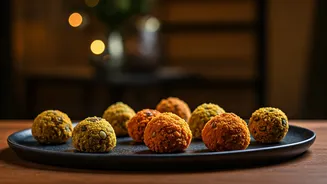
Curiously, the name 'Ram Laddu' might suggest a sweet treat, a common characteristic of items bearing the 'laddu' moniker in Indian cuisine. However, this popular street snack is decidedly savoury. The 'laddu' part of its name is thought to stem from its characteristic round shape, a convention often employed in the naming of Indian street foods where the visual form can take precedence over the flavour profile. This linguistic quirk highlights a playful aspect of how everyday foods are named and embraced within local culinary traditions, distinguishing it significantly from its sweeter namesake and establishing its unique identity as a palate-pleasing, savoury delight.
Northern Roots and Rise
The origins of Ram Laddu are deeply embedded in the culinary landscape of North India, with strong ties to Delhi and the western regions of Uttar Pradesh. Its emergence is closely linked to the need for an accessible, satisfying, and economical snack that could be prepared efficiently for a large populace. As a filling yet affordable option, it quickly found favour among students and laborers seeking a quick and nourishing bite. This historical context underscores its role as a practical food item that evolved to meet the demands of urban life, laying the groundwork for its widespread adoption and eventual status as a quintessential Delhi street food.
The Essential Toppings
What truly elevates Ram Laddu from a simple lentil fritter to an unforgettable culinary experience is its dynamic duo of toppings. The inclusion of a zesty green chutney, often enhanced with tangy tamarind or imli, provides a burst of acidity and spice. This is perfectly complemented by the cooling crunch of freshly grated white radish, which adds a refreshing counterpoint to the fried fritters. This masterful combination of heat, zest, and crispness transforms a basic snack into a complex flavour profile, a testament to the ingenuity of street food vendors who created a 'flavour bomb' from simple ingredients.
Migration's Culinary Legacy
The journey of Ram Laddu to prominence is intrinsically linked to the waves of migration, particularly from Uttar Pradesh, to Delhi. Vendors, carrying with them traditional, simple recipes based on lentils, introduced these dishes to the burgeoning city. Over time, strategic locations in bustling local markets such as Lajpat Nagar, Karol Bagh, and the historic Chandni Chowk became hubs for this burgeoning street food culture. These vibrant marketplaces played a pivotal role in popularizing Ram Laddu, helping it transition from a vendor's simple offering to a beloved and indispensable evening snack for the city's residents.
Enduring Delhi Charm
Even today, Ram Laddu stands as a proud testament to culinary tradition, largely unaltered in its preparation and presentation. It continues to be savoured directly from street carts, often enjoyed with bare hands, embodying an authentic street-side dining experience. This humble fritter remains a particular favourite during the cooler winter months, its warmth and spice providing comfort. Its persistent popularity is a direct reflection of its inherent simplicity, the potent sense of nostalgia it evokes, and its undeniable, quintessential Delhi character that resonates deeply with locals and visitors alike.