






Optimal Seated Posture
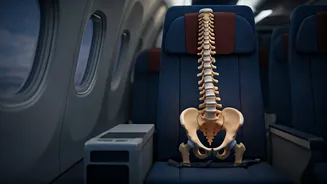
Achieving a comfortable and healthy seated position on a long flight hinges on maintaining a neutral spine. Experts emphasize starting from the ground
up: ensure your feet are flat on the floor, your hips are pushed back fully into the seat, and your knees are bent at approximately a 90-degree angle. For shorter individuals whose feet don't reach the floor, a small bag can serve as a makeshift footrest, though it must be stowed during critical flight phases. To support the natural curve of your lower back, a compact lumbar pillow or a rolled-up piece of clothing placed behind your lower back can significantly alleviate strain. If you don't have a pillow, actively shifting your weight onto your sit bones—the bony prominences felt when sitting on a hard surface—can help alleviate pressure and maintain spinal alignment.
Embrace Movement
Even with ideal posture, remaining static for hours can lead to discomfort. Healthcare professionals strongly advise incorporating regular movement into your flight routine. Aim to stand up and walk the aisle at least once every hour. In addition to these longer breaks, gentle seated exercises every 30 minutes are highly beneficial. Combat upper back and neck stiffness with shoulder rolls, or try a more advanced technique: shrug your shoulders up, roll them back, and then slide them down your rib cage, encouraging the shoulder blades to lie flat. Seated cat-cow stretches, involving arching and rounding the lower back, and thoracic rotations, gently twisting the rib cage, are also excellent for mobility. For leg circulation, ankle pumps—alternating lifting toes and heels—help prevent swelling and stiffness. Compression socks, especially for flights over three hours, offer proven benefits by aiding blood flow back to the heart, reducing post-flight leg heaviness.
Things to Avoid
Certain common habits and items can exacerbate in-flight discomfort. Experts caution against crossing your legs for extended periods, as this creates rotational stress on the pelvis and lower spine, potentially leading to sciatic-like pain. Slouching and leaning heavily to one side against the airplane wall also increase strain on the lumbar region. Furthermore, the ubiquitous U-shaped neck pillow is often counterproductive; it tends to push the head forward, increasing strain on the cervical spine rather than providing support. Opt for pillows that cradle the sides of your neck, allowing your head to rest more naturally. Lastly, staying hydrated is crucial. Dehydration affects the spinal discs' ability to function optimally. Combining dehydration with poor posture and prolonged sitting can lead to significant stiffness and pain upon arrival at your destination.