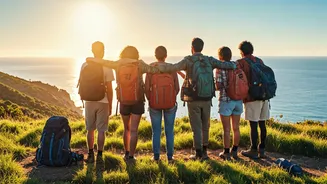








The Rise of Shared Journeys
A significant shift is underway in how younger generations approach travel. Moving beyond the solitary exploration, millennials and Gen Z are increasingly
drawn to community travel—organized group excursions where strangers embark on adventures together. This movement isn't merely about visiting new places; it's a profound quest for human connection in an increasingly digital world. Many young travelers, despite embarking on solo trips, find themselves seeking the company of like-minded individuals, transforming the solitary experience into a communal one. Companies are recognizing this demand, curating group trips specifically designed to foster camaraderie and shared memories, making travel a vehicle for building new friendships and a sense of belonging. The appeal lies in navigating unfamiliar territories not alone, but as part of a supportive and engaging group, enriching the travel experience immeasurably.
Why Group Travel Appeals
The growing popularity of community travel among younger demographics can be attributed to several compelling factors. Firstly, it offers a solution to the modern challenge of maintaining social connections in an era of frequent relocations for education or career. With established friend circles often dispersed, planning traditional trips becomes difficult. Community travel conveniently sidesteps this issue, providing ready-made companions. Secondly, convenience is a major draw; these curated tours handle all the intricate logistics, from flights and accommodations to visas and sightseeing, allowing travelers to simply relax and enjoy the journey. Furthermore, group tours are often more affordable due to shared costs for transport and lodging, making ambitious itineraries accessible. Perhaps most importantly, these trips offer a powerful antidote to digital isolation, providing genuine human interaction and the opportunity to forge authentic friendships with people who share similar interests and a passion for exploration. This focus on real-world experiences and social belonging resonates deeply with a generation keen on meaningful interactions.
Making Connections Happen
Community travel excels at facilitating genuine connections, even among individuals who might initially be introverted. The structured yet relaxed environment of a group tour naturally encourages interaction. Shared experiences, such as exploring a new city, participating in group activities, or even just the long hours spent traveling together on a bus, create ample opportunities for conversations to blossom. These shared moments help break down initial awkwardness, allowing strangers to quickly transition into friends. For many in their late twenties and thirties, life changes like marriage or career shifts can significantly alter social dynamics and reduce the availability of old travel buddies. Community trips offer a practical and enjoyable middle ground, enabling solo travelers to explore the world with the comfort of companionship. The safety aspect is also a significant advantage, particularly for women traveling internationally, as being part of a group provides an inherent safety net. The unpredictability of meeting new people on each trip adds a layer of excitement, and while not every acquaintance evolves into a lifelong friendship, the opportunity for meaningful connections is consistently present.
Challenges and Surprises
While community travel predominantly offers positive outcomes, it's not without its potential drawbacks. The fixed nature of itineraries, while ensuring efficiency, can sometimes limit spontaneous detours or personal exploration. The success of a trip can also be heavily influenced by the group's dynamic; a large number of participants or mismatched personalities can sometimes detract from the sense of community, making the experience feel more like navigating a crowd than fostering deep bonds. One traveler shared a disappointing experience with a very large group where bonding was difficult, leading to feelings of isolation. However, the possibility of meeting new people keeps travelers returning to this model, often with different companies to ensure a better fit. On a more serendipitous note, these journeys have unexpectedly become fertile ground for romance, with numerous couples finding life partners amidst shared adventures. This organic connection-building is increasingly valued over the often-impersonal interactions found on dating apps, highlighting the authentic human element at the core of community travel.
The Business of Belonging
The burgeoning popularity of community travel has established a distinct and growing segment within the tourism industry. Companies orchestrating these trips meticulously manage logistics to create an illusion of effortless travel for participants. Behind the scenes, a complex network of partnerships, advanced systems, and trained personnel ensures seamless execution. Trip captains, in particular, play a crucial role; they undergo rigorous training covering logistics, conflict resolution, and fostering a comfortable group atmosphere. Their performance is closely monitored through traveler feedback, directly impacting their compensation. These captains act as the central hub, bridging travelers, local vendors, and the organizing company. They are supported by knowledgeable local guides who enhance the cultural immersion and safety of the experience. These guides often go above and beyond, from sharing local history and safety tips to keeping spirits high with songs and energetic interactions, turning every journey into a vibrant and engaging exploration. The entire operation is designed to maximize traveler enjoyment and connection.