






Phirni's Creamy Delight
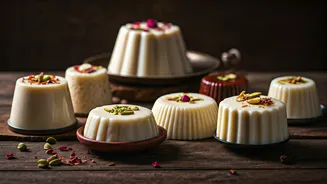
Phirni, holding a commendable 3rd position globally, is a testament to the art of slow-cooked indulgence. This dessert is crafted by meticulously simmering
milk and rice, often finely ground, until it achieves a luxuriously creamy texture. The gentle cooking process is key, allowing the flavours to meld beautifully and the aroma to develop, transforming a simple base into a celebratory treat. Traditionally served chilled in small, unglazed clay bowls, which help keep it cool and impart a subtle earthy note, Phirni is often associated with special occasions and festivals. Its velvety smoothness and delicate fragrance offer a sensory experience that goes beyond mere taste, embodying a tradition of patience and culinary care that deeply resonates with those who prepare and enjoy it.
Kheer: Ancient Comfort
Securing the 7th spot, Kheer stands as one of India's most ancient and cherished desserts, with its origins traceable back to historical texts. This beloved rice pudding has maintained its essence over centuries, a continuity that food historian Sadaf Hussain emphasizes. The preparation involves cooking rice with milk and sugar, often enhanced with fragrant cardamom, saffron, and garnished with nuts like almonds and pistachios. Kheer embodies a comforting familiarity, a taste of home and tradition that transcends generations. Its enduring appeal lies in its simple yet profound ability to evoke nostalgia and provide a sense of solace, making it a quintessential part of Indian culinary heritage that has remarkably stood the test of time.
Sakkarai Pongal's Harvest
Representing South India and ranked 15th, Sakkarai Pongal is a sweet dish deeply intertwined with the region's agricultural bounty and festive calendar. Its preparation often involves rice cooked with jaggery, ghee, and cardamom, frequently adorned with cashews and raisins. This dish is more than just a dessert; it's a symbol of gratitude and celebration during harvest seasons, connecting those who partake in it to the cycle of nature, hard work, and the land. Eating Sakkarai Pongal during these times is a way of participating in a ritual that honours abundance and the fruits of labour, reflecting a profound cultural connection to agrarian life and its associated beliefs and traditions.
Pongal's Daily Charm
Although sometimes prepared as a savoury dish, Pongal's inclusion at rank 19 highlights its significance as a comforting, porridge-like staple in South India. This versatile dish, often made with rice and lentils, is a cornerstone of daily meals, reflecting a connection to everyday life and simple sustenance. Its comforting nature and widespread appeal have made it a cultural constant across the region. The variations in Pongal, whether sweet or savoury, showcase its adaptability and deep integration into the culinary fabric of South India, representing a sense of homeliness and accessible nourishment that resonates with people from all walks of life.
Doodhpak's Richness
Hailing from Western India and earning the 24th spot, Doodhpak presents a richer, more decadent rendition of rice pudding. This dish is characterized by its intense creaminess, often achieved by slow-cooking milk until it thickens considerably, with rice added to create a luscious consistency. It is frequently infused with the luxurious aroma and vibrant hue of saffron, along with a generous scattering of chopped nuts. Doodhpak's opulent texture and flavour profile reflect the regional penchant for indulgence, especially during celebratory occasions and festive gatherings, offering a taste of sophisticated comfort and culinary richness.
Ven Pongal's Savoury Twist
Ven Pongal, ranked 26th, offers a fascinating savoury counterpoint to the other sweet rice puddings on the list. This South Indian preparation combines rice with protein-rich lentils, tempered with aromatic spices, black pepper, and ghee. Its flavour profile is a delightful balance of comforting textures and savoury notes, often enhanced by the addition of ginger and cumin. The creation of Ven Pongal is deeply influenced by the local environment, climate, and lifestyle, showcasing how regional identity is intrinsically woven into culinary practices. It stands as a prime example of the diverse applications of rice in Indian cuisine, demonstrating its versatility beyond the realm of desserts.