





Innovative Propulsion System
General Galactic, a nascent company based in Southern California, is on the verge of launching a significant demonstration mission, codenamed Trinity,
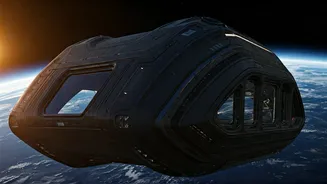
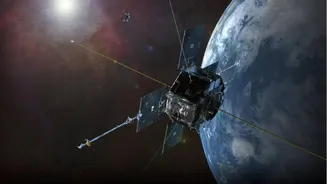
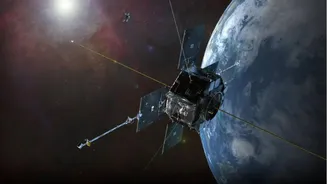
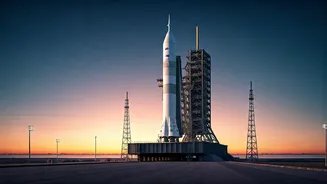
slated for later this year. This mission will showcase a novel multimode propulsion system aboard a 500-kilogram satellite, set to travel to low-Earth orbit via the SpaceX Transporter-18 rideshare. The core of this innovation is the Genesis platform, which ingeniously combines chemical and electric engines. CEO Halen Mattison, a former SpaceX engineer, emphasizes that the company's focus isn't on selling propulsion systems themselves, but rather on how their technology will serve as a critical enabler for a diverse array of space missions in the coming years. The propulsion technology is entirely reliant on water and its electrolysis, offering a remarkable leap in efficiency compared to many existing market alternatives. Founded in 2023 by Mattison and Luke Neise, a former engineer at Varda Space Industries, General Galactic harbors a grand ambition: to establish itself as a major player in the space domain, effectively functioning as the 'galaxy's energy and logistics company.'
Propellant Factories for Space
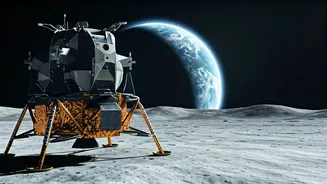
The groundbreaking electrolyzer technology being tested on the Trinity mission is designed to be the foundational element for future propellant factories. General Galactic envisions deploying these factories on the Moon and eventually on Mars, thereby facilitating crucial refueling operations. This capability would not only benefit General Galactic's own operations but also extend to other launch companies and entities aiming to expand their presence and activities in the extraterrestrial sphere. The company has already developed space-rated electrolysis cells specifically engineered to serve as the building blocks for these ambitious lunar and Martian propellant production facilities. This strategic development highlights a forward-thinking approach to overcoming the logistical challenges of long-duration and extended-range space exploration and commercialization, paving the way for more sustainable and scalable off-world activities.
Enhanced Maneuverability
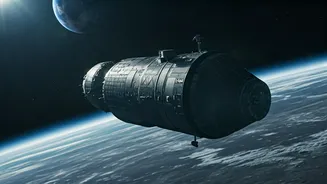
With approximately $10 million in funding secured to date, General Galactic is focusing on its water-based propulsion system. The Genesis platform is engineered to significantly enhance satellite maneuverability. It achieves this by integrating a chemical engine for rapid, immediate directional changes and a Hall thruster for sustained, longer-duration adjustments in velocity. Mattison describes this architecture as the most agile and capable spacecraft design yet fielded, capable of supporting what the Space Force terms 'sustained maneuver' and rapid maneuvering. This enhanced agility is intended to capture the attention of both professional and amateur satellite trackers, demonstrating capabilities that extend beyond standard operational parameters. The goal is to perform maneuvers and conduct operations in a way that is not only beneficial from a business development perspective but also noticeable to observers and potential adversaries, acknowledging the intense competition and race to develop more capable and maneuverable spacecraft in the current space environment.
Expanding Beyond Earth
In anticipation of the Trinity launch, General Galactic is actively engaging with a diverse clientele, including commercial, civil, and military entities. Looking beyond the initial Trinity mission, the company has outlined plans to deploy satellites into medium-Earth orbit (MEO) and geostationary orbit (GEO), with an ultimate aim of reaching cis-lunar space and, ideally, venturing even further. Their strategic objective is to construct a versatile platform capable of supporting all these varied orbital destinations. It's worth noting that water electrolysis propulsion systems are not entirely new to spaceflight; NASA's PUNCH mission, launched in 2025, features thrusters that utilize water electrolysis to split water into hydrogen and oxygen. Furthermore, Tethers Unlimited demonstrated a similar technology with their Hydros-C system on a NASA Pathfinder Technology Demonstrator cubesat in 2021. However, the Genesis system is designed to offer a superior 'specific impulse' and is being developed with ease of manufacturing as a key consideration, indicating a commitment to scalability and mass production to meet growing demand.
Long-Term Space Potential
The selection of water-fueled thrusters by General Galactic engineers is rooted in their substantial current and prospective advantages. In the immediate future, this technology offers a transformative capability for repositioning assets within space. Crucially, as the ability to source water beyond Earth's gravitational pull becomes feasible, it establishes a new fundamental basis for human activities in off-world environments. The long-term vision for Genesis engines involves utilizing in-situ resources, such as lunar ice, as a readily available propellant source. This not only reduces the reliance on Earth-based resupply but also significantly lowers the cost and complexity of sustained space operations, aligning with the company's overarching goal of becoming a comprehensive energy and logistics provider for the entire galaxy.