







Strategic Autonomous Partnership
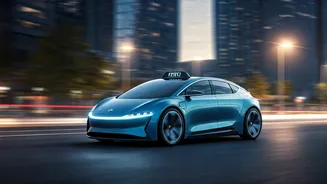
In a move set to redefine urban transportation, a major ride-hailing service has committed to a substantial investment in a self-driving technology firm.
This significant financial backing, amounting to $1.25 billion, is designed to accelerate the deployment of an impressive fleet of up to 50,000 fully autonomous vehicles. The agreement outlines an initial purchase of 10,000 of these specialized vehicles, with an option to increase this number by an additional 40,000 units by the year 2030. This ambitious plan hinges on the successful achievement of specific performance benchmarks related to the autonomous capabilities of the vehicles. The company views this partnership as a crucial step in its long-term strategy to integrate driverless technology into its core service offerings, aiming to enhance efficiency and user experience.
Phased Deployment and Geographic Reach
The vehicles manufactured under this agreement will be exclusively available through the established ride-hailing network, ensuring a streamlined user experience. Commercial operations are anticipated to commence in two pilot cities, San Francisco and Miami, starting in 2028. This initial launch will serve as a crucial testing ground for the technology and operational logistics. Following a successful debut, the service is projected to expand its footprint significantly. By the close of 2031, the aim is to have these autonomous taxis operating in an extensive network of 25 cities, spanning across the United States, Canada, and extending into Europe. This phased approach allows for careful scaling and adaptation to diverse urban environments.
Cutting-Edge Autonomous Technology
This strategic alliance is set to coincide with the upcoming launch of a new generation of autonomous driving technology from the vehicle manufacturer, scheduled for late 2026. This advanced platform is designed with an emphasis on robust sensor suites and powerful computational processing, which the company asserts will make it the most advanced self-driving system available in a consumer-grade vehicle throughout North America. The vehicle manufacturer's CEO expressed strong confidence in the integrated design approach, highlighting how developing the vehicle, its internal computing system, and the software stack in tandem allows for complete oversight. This end-to-end control over manufacturing and supply chain management within the United States is seen as a key differentiator.
Conviction in Vertical Integration
The leadership of the ride-hailing company articulated their conviction in the manufacturer's development model, particularly emphasizing the benefits derived from vertically integrated operations. They noted that the ability to design the vehicle, its sophisticated compute platform, and the entire software architecture cohesively, while maintaining direct control over scaled manufacturing and sourcing within the United States, provides a solid foundation for their ambitious targets. Furthermore, the data generated from the manufacturer's expanding base of consumer vehicles, coupled with their experience in managing the intricate demands of commercial fleet operations, instills a high degree of confidence. This combined expertise is viewed as instrumental in achieving the challenging, yet attainable, deployment goals for the autonomous taxi service.