





A Towering Ascent
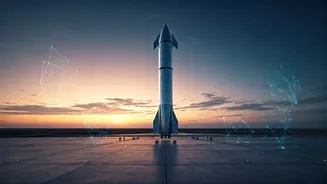
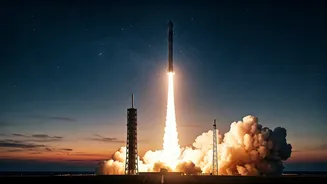
The colossal, 407-foot Starship V3, hailed as the most powerful rocket ever constructed, embarked on its maiden voyage from SpaceX's Starbase facility
in Texas. Lifting off at 5:30 p.m. local time, the mission's initial moments saw the upper stage successfully detach from the massive Super Heavy booster, continuing its journey into the void of space. This test was more than just a flight; it was a comprehensive evaluation of new hardware and infrastructure, including a newly developed launchpad that has been years in the making. The upgraded V3 model boasts third-generation Raptor engines, designed for increased thrust and enhanced simplicity, promising faster takeoffs and more streamlined recovery processes.
Booster's Tumultuous Return
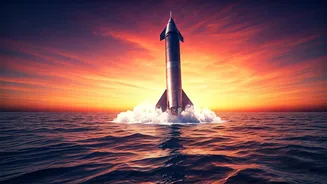
The Super Heavy booster, after its critical role in propelling Starship V3 skyward, began its descent back towards Earth for a planned simulated landing in the Gulf of Mexico. However, the crucial engine re-ignition sequence, vital for a controlled return, did not execute as intended. Instead of a gentle landing, the booster experienced an uncontrolled tumble, ultimately culminating in its likely destruction upon impacting the water. This unexpected outcome highlights the inherent risks and complexities involved in developing reusable rocket technology, even with significant advancements.
Starship's Space Odyssey
While the booster's return was marred by failure, the Starship upper stage encountered its own set of challenges during its ascent, losing one of its six Raptor engines. Despite this setback, the spacecraft successfully deployed all 20 Starlink satellite simulators and two specially modified Starlink satellites tasked with capturing external footage. Approximately an hour after liftoff, Starship initiated a simulated landing maneuver over the Indian Ocean. This phase concluded with the vehicle tipping over and disintegrating, a pre-programmed outcome for this particular test flight. The mission's success, therefore, is measured not by a perfect landing, but by the data and insights gained from these critical stages.
Strategic Imperatives
This flight represented a pivotal moment for SpaceX, occurring just as the company prepares for its initial public offering (IPO) with an expected Nasdaq listing in mid-June. The IPO aims to raise approximately $75 billion, funds earmarked for continued development, ambitious artificial intelligence projects, and to offset debts related to xAI and X. This test launch also occurred after previous delays; an earlier attempt on Thursday was postponed due to a hydraulic pin on the launch tower arm failing to retract. The company has invested billions of dollars over many years into Starship, viewing it as indispensable for its long-term objective of establishing multi-planetary life, including crucial NASA missions to the Moon and Mars. Furthermore, Starship plays a vital role in deploying advanced Starlink satellites, which currently represent the company's sole profitable venture.