
Budget Overview
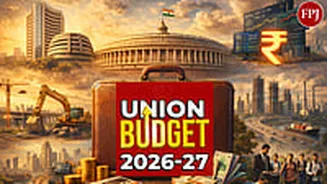
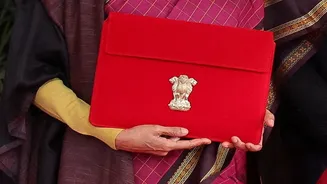
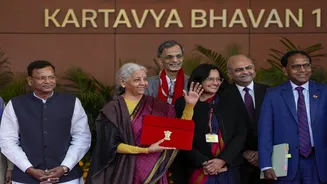
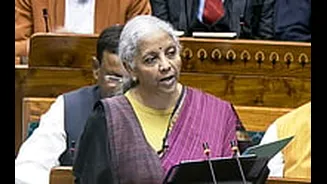
The Union Budget 2026-27, lauded by Prime Minister Modi as ambitious, prioritizes growth and fiscal responsibility. The Finance Minister announced a record
capital expenditure (capex) of Rs 12.22 lakh crore for FY27, which constitutes 4.4% of the GDP. This focus is expected to stimulate the economy. The budget emphasizes key sectors. India Inc. has praised the budget for its potential to boost the economy and enhance global competitiveness. Specific allocations reflect a commitment to infrastructure development, with the Railways receiving a substantial boost. Simultaneously, the budget has faced criticism from some quarters, particularly concerning the allocation of funds to certain states and sectors. The government's focus is on sustainable and inclusive growth and a self-reliant economic framework.
Infrastructure & Railways
The budget highlights infrastructure development as a critical area of focus. The allocation for the Railways received a substantial boost, with a capital expenditure of Rs 2.77 lakh crore for FY2026-27, reflecting a 10.25% increase. This significant investment is directed towards infrastructure modernization, including high-speed corridors, and improvements in freight operations. Moreover, the focus extends to developing tier II and III cities, alongside temple towns, with modern infrastructure. An allocation of Rs 2,000 crore has been made to the NCRTC (National Capital Region Transport Corporation), though this represents a 25% decrease compared to previous allocations. The development of infrastructure in Jammu and Kashmir received specific attention, with a proposed transfer of Rs 43,290 crore from the Centre in FY27, an increase of 4.72%.
Sectoral Allocations
Several sectors received noteworthy allocations in the 2026-27 budget. The Ministry of External Affairs (MEA) was allocated Rs 22,118 crore, with Bhutan receiving the largest share. The Union Home Ministry secured Rs 2.5 lakh crore, with the majority of funds allocated to Central Police Forces and the development of Jammu and Kashmir. The AYUSH ministry saw a 20% increase in its allocation, with plans to establish three new All India Institutes of Ayurveda. The Ministry of Information and Broadcasting received Rs 4,551 crore, which includes funds for Prasar Bharati and community radio initiatives. The telecom sector also benefited, with a proposed outlay of Rs 73,990 crore, with BSNL receiving Rs 28,473 crore for network expansion.
MSMEs & Agriculture
The Union Budget 2026-27 had mixed implications for MSMEs and the agricultural sector. The Association of Indian Entrepreneurs expressed disappointment that the budget lacked specific announcements tailored to MSMEs, raising concerns about GST, loan provisions, and raw material prices. The budget aimed to support agriculture via the launch of Bharat-VISTAAR, a multi-lingual AI tool for the agricultural sector. On the other hand, farmer groups in Punjab and Haryana criticized the budget for allegedly neglecting their needs. The absence of specific measures to address the challenges faced by farmers led to criticism from opposition parties. These contrasting perspectives emphasize the varied impact of the budget on different segments of the economy.
Stock Market & Economy
The stock market experienced volatility following the budget announcement. An increase in the Securities Transaction Tax (STT) on futures led to a market crash, with the Sensex and Nifty indices declining. Experts analyzed the impact of the STT hike on market participants and Foreign Institutional Investor (FII) flows. Despite the negative market reaction, the budget was widely viewed as growth-oriented. Vedanta Group Chairman Anil Agarwal lauded the budget for its focus on public capital expenditure and opportunities for youth. Ashok Leyland echoed this sentiment, calling the budget pro-growth and development-focused. The budget's focus on metals, mining, and exports was also commended for paving the way towards a self-reliant India. Moreover, customs duty rationalization was anticipated to boost exports and domestic manufacturing.
Regional & State Impacts
The budget revealed varying impacts on different regions and states. Jammu and Kashmir received significant financial attention, with a substantial fund transfer proposed by the Centre. In contrast, the Chief Minister of Kerala criticized the budget, alleging discrimination and neglect. Opposition parties in Punjab and Haryana also voiced their dissatisfaction with the budget, primarily due to the perceived lack of support for farmers and industry. The budget's impact on Delhi was mixed, with traders expressing both positive and negative perspectives. The Northeastern region was poised to benefit from the budget, with the budget positioned as a multi-dimensional growth engine. These contrasting responses highlight the diverse implications and varied regional impacts of the budget.
Other Key Highlights
Several other key aspects of the budget were noteworthy. The budget proposed a tax exemption on Motor Accident Claims Tribunal awards. The budget's emphasis on green initiatives, including grid-scale energy storage and renewable energy integration, was highlighted. The aviation sector received attention through VGF for seaplanes and customs duty exemptions for aircraft components. The budget also set a unified 15.5% safe harbor margin for IT services, aiming to enhance India's attractiveness to global tech giants. Additionally, Rs 6,000 crore was allocated for Census 2027, with the process scheduled to commence in April after delays due to the COVID-19 pandemic. The budget underscored the government's comprehensive approach across different sectors.