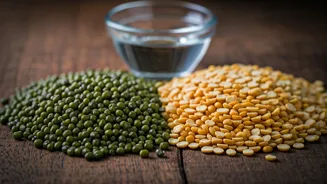

Digestive Advantage Explained
Whole green moong, also known as sabut moong, possesses distinct advantages over yellow dal when it comes to digestion. The key lies in the presence of
the seed coat, which is retained in the whole form. This coat is rich in fiber, which aids in smoother digestion and prevents constipation. Additionally, the process of digestion starts with the seed coat which helps to break down the nutrients in the dal, which in turn helps in better digestion. The fibre content also helps in managing blood sugar levels, making it a good choice for people with diabetes or those looking to control their blood sugar. The natural enzymes present in green moong are thought to boost the digestive process, making it less taxing on the gut compared to yellow dal, which often undergoes processing that can alter its enzymatic profile. All of these factors combined contribute to making whole green moong a gentler option for the digestive system.
Fiber's Role in Digestion
The high fiber content is a standout reason why green moong excels in digestion. Fiber, especially the insoluble type, adds bulk to the stool, helping it move through the intestines efficiently. This bulk reduces the time food stays in the digestive tract, minimizing bloating, gas, and indigestion. Furthermore, fiber helps regulate bowel movements, which prevents both constipation and diarrhea. In the context of green moong, the fiber-rich seed coat acts as a natural prebiotic, nourishing beneficial gut bacteria. Healthy gut flora is linked to improved digestion, enhanced nutrient absorption, and a stronger immune system. Thus, the fiber in whole green moong not only aids digestion directly but also nurtures a supportive gut environment.
Soaking for Better Digestion
Soaking whole green moong before cooking is a highly recommended practice to enhance its digestibility. Soaking softens the outer layer, making it easier for the body to break down. This process also starts the germination, increasing the availability of nutrients and decreasing the presence of phytic acid, an anti-nutrient that can hinder mineral absorption. Soaking reduces the cooking time required, which further benefits digestion, as less cooking preserves more nutrients and reduces the formation of potentially indigestible compounds. The water used for soaking also leaches out some of the compounds which may cause gas or bloating. It is typically recommended to soak green moong for at least a couple of hours, though overnight soaking is also common. This simple step can dramatically improve the ease with which your body processes the dal, making it a digestive winner.
Suitable for All Ages
Whole green moong dal is generally considered safe and beneficial for people of all ages, including children and elders. Its gentle nature makes it a good option for those with sensitive digestive systems. For children, the easily digestible nature of green moong supports healthy growth and development without overwhelming their young digestive tracts. For elders, who may have slower digestion, green moong provides essential nutrients with minimal strain on their systems. However, individual tolerance can vary, so it's always best to introduce it gradually, especially for infants or those new to legumes. Preparing the dal properly, like soaking and cooking thoroughly, ensures the best digestibility and nutrient absorption for all age groups. It serves as an excellent source of protein, fiber, and various vitamins and minerals, promoting overall well-being across the lifespan.
Preparing Green Moong Correctly
The way you prepare green moong impacts its digestibility. Starting with high-quality green moong is essential. Rinse the dal thoroughly to remove any impurities. Soaking the moong for several hours, ideally overnight, is crucial. This helps to soften the outer layer and starts the germination process, making it easier for your body to digest. After soaking, drain the water. When cooking, use fresh water and cook the moong until it is soft, avoiding undercooking, as this can make it harder to digest. Season the dal with digestive spices like asafoetida (hing), cumin, and ginger, which also aid digestion. Consider pressure cooking or slow cooking methods for optimal results, as these methods can help break down the dal. Proper preparation significantly improves digestibility, ensuring you get the most nutritional benefits from the green moong without digestive discomfort.