







Pioneering Orbital Processing
In the burgeoning field of space-based data centers, a significant advancement has been made by Kepler Communications. They have successfully launched
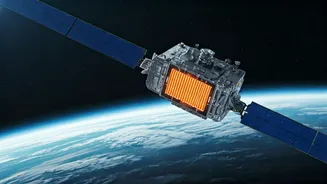
and deployed the most extensive compute cluster currently operating in orbit. This innovative system, initiated in January, comprises approximately 40 Nvidia Orin edge processors distributed across 10 operational satellites. These satellites are interconnected through advanced laser communication links, forming a robust and high-speed network. The company has already secured 18 clients, with Sophia Space being their latest partner, set to test software configurations on Kepler's constellation. This development is crucial as experts predict large-scale orbital data centers won't be a reality until the 2030s, with immediate focus shifting to processing data generated in space to enhance the capabilities of existing space-based sensors for both commercial and governmental use. Kepler positions itself not as a data center provider but as essential infrastructure for various space applications, offering network services for satellites and even aerial platforms.
Sophia Space Partnership
A key development highlighting the practical applications of orbital compute is the collaboration between Kepler Communications and Sophia Space. Sophia Space is developing unique, passively-cooled space computers designed to tackle the challenge of overheating powerful processors in orbit, thereby avoiding the need for heavy and costly active-cooling systems. Under their new agreement, Sophia will deploy its proprietary operating system onto one of Kepler’s satellites. This will allow them to test the software's launch and configuration process across six GPUs spread over two spacecraft. This operation represents a significant first, as such deployment procedures are standard on Earth but have not yet been attempted in space. Successfully validating this software in an orbital environment is a critical step for Sophia, reducing risks before their planned satellite launch in late 2027. For Kepler, this partnership serves to underscore the value and versatility of their network infrastructure. While they currently handle data from ground uploads and hosted payloads, this collaboration demonstrates their capability to integrate and provide services for third-party satellites as the space sector matures.
Edge Processing's Future
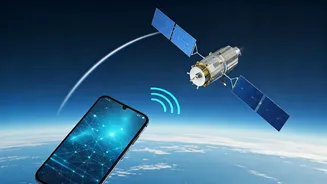
The strategic advantage of orbital compute lies in its ability to facilitate edge processing, which means handling data closer to where it's generated. This capability is particularly beneficial for power-intensive sensors, such as synthetic aperture radar, which can offload their processing tasks to Kepler’s network. The U.S. military is a significant proponent of this technology, utilizing it for advanced missile defense systems that rely on satellites for threat detection and tracking. Kepler has already showcased its proficiency in space-to-air laser communication for governmental demonstrations. This approach of distributed processing at the 'edge' is where orbital data centers are expected to prove their initial worth. It distinguishes Kepler and Sophia from larger entities like SpaceX and established space firms, as well as well-funded startups, that are focusing on building massive, terrestrial-style data centers in space. Kepler’s CEO, Mina Mitry, emphasizes a preference for numerous distributed GPUs capable of inference over a single, powerful GPU designed for training. Their model leverages GPUs that operate at full capacity 100% of the time, optimizing efficiency for continuous tasks rather than intermittent, high-demand workloads.