






Bridging the Perceptual Gap
For a long time, humanity has observed the animal kingdom with a deep sense of curiosity, trying to decipher the motivations behind their organized movements,
vocalizations, and social structures. These complex behaviors, often invisible to our limited senses, presented a significant barrier to comprehension. Traditional research methods involved extensive fieldwork, meticulous note-taking, audio recordings, and visual observations. While these efforts provided foundational knowledge, they were inherently constrained by human observational capacity. Subtle cues, fleeting gestures, or nuanced vocalizations could easily be overlooked, leaving vast amounts of data scattered and preventing the identification of overarching patterns. This often meant that the true depth of animal social dynamics remained largely concealed, prompting a desire for more advanced tools to truly listen and understand.
AI Decodes Animal Language
Artificial intelligence is now fundamentally transforming how we uncover these intricate patterns. By processing massive volumes of audio-visual data, AI algorithms can pinpoint behaviors and communication signals that human observers might miss entirely. Machine learning models are trained on vast datasets, including videos of animals in their natural habitats, hours of acoustic recordings, and detailed movement data. These sophisticated systems excel at identifying recurring actions, differentiating subtle variations in vocalizations, and even inferring social relationships and emotional states. For instance, what might appear as simple play in a squirrel can, through AI analysis of numerous such instances, be understood as a consistent social challenge signal. AI effectively translates opaque actions into decipherable behavioral rules, offering unprecedented clarity into animal interactions and social structures across species, from primates to marine life.
Listening to Hidden Voices
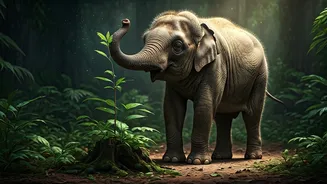
The impact of AI on bioacoustics has been equally profound, transforming sounds once dismissed as ambient noise into meaningful data. The barks of dogs, the complex codas of whales, and the low rumbles of elephants are now being analyzed to reveal specific information regarding identity, context, and intent. Machine learning has enabled the visualization of intricate patterns within whale vocalizations, suggesting sophisticated communication systems that were previously completely hidden from us. This advancement extends beyond academic interest, offering tangible benefits for conservation efforts. Conservationists can now monitor stress levels and disturbances in wildlife populations, while welfare experts can detect early signs of illness or discomfort. Ecologists can also assess the health of ecosystems by tracking changes in acoustic environments. As our understanding of animal social and emotional lives deepens, it compels us to reconsider our ethical responsibilities and interactions with other species.