




More Product, Less Clean
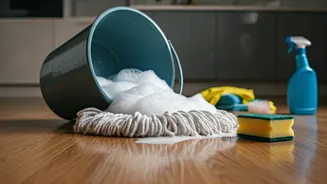
A pervasive belief is that applying a generous amount of cleaning solution equates to superior cleanliness. However, this is a common misconception that can
lead to unintended consequences. Using excessive cleaning agents doesn't just lead to waste; it can result in a sticky residue left on surfaces. This residue acts as a magnet for further dust and grime, making your surfaces appear dull and potentially hindering the effectiveness of future cleaning. The same principle applies to laundry. Overusing detergent can leave behind soap scum on your clothes, sometimes necessitating an additional wash cycle to completely rinse them, thus negating any perceived efficiency. To achieve genuine cleanliness without the added burden of residue, adhere strictly to the recommended usage amounts on product labels.
Vinegar & Bleach Fallacy
The idea that vinegar or bleach can be a universal cleaning panacea is a persistent myth. While both are potent cleaning agents with specific strengths, neither is suitable for every situation. Bleach excels at disinfection and tackling tough stains, particularly in laundry rooms and bathrooms. However, it struggles on its own to cut through greasy build-up. It's often more effective when combined with other ingredients for stubborn messes. Vinegar, on the other hand, is adept at breaking down dirt and addressing hard water stains. Yet, its acidic nature means it's not safe for all materials, posing a risk to surfaces like granite and wood. Using them judiciously and understanding their limitations is key to avoiding damage.
Feather Duster Fiction
The classic feather duster, while visually appealing, is largely ineffective at true dust removal. Instead of trapping dust, most feather dusters merely redistribute it across surfaces or, worse, send it airborne, compromising indoor air quality and creating more work later. While high-quality ostrich feather dusters might offer some efficacy, typical synthetic or lower-grade dusters fail to capture and hold onto dust particles. For genuinely dust-free surfaces, opt for tools designed to trap dust, such as microfiber cloths, which are engineered to ensnare particles rather than scatter them. Alternatively, a slightly damp cloth or a vacuum cleaner can more thoroughly remove dust and prevent its immediate resettlement.
Hairspray Ink Myth
The advice to use hairspray to remove ink stains, often passed down through generations, is largely outdated. This method may have had some efficacy in the past when hairspray formulations contained higher concentrations of alcohol, which could help break down ink. Modern hairsprays, however, typically contain less or no alcohol and often include stiffening agents. These ingredients can, unfortunately, set the stain further or leave behind a sticky residue, exacerbating the problem. A much more reliable and effective solution for ink stains is rubbing alcohol, which actively breaks down ink without leaving unwanted residue, making it the superior choice for stain treatment.
Appliance Neglect Myth
A common oversight is the belief that household appliances like dishwashers and washing machines do not require cleaning because they handle our dirty items. This is a significant misconception; these machines are not self-cleaning and accumulate debris over time. Dishwasher filters can become clogged with food particles, leading to drainage problems, bacterial growth, and unpleasant odors. It is recommended to clean these filters monthly. Washing machines also need regular maintenance; most benefit from cleaning twice a year, with front-loaders requiring monthly attention and their rubber seals wiped down to prevent mold. Running a cleaning cycle with vinegar or bleach can help remove internal buildup and odors, ensuring they continue to function efficiently and hygienically.