






Nature's Microplastic Solution
In a remarkable scientific breakthrough, research indicates that an extract derived from moringa seeds, a plant widely recognized for its nutritional benefits,
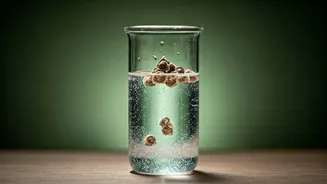
possesses a significant ability to extract microplastics from water. This natural agent performs comparably to, and in some instances surpasses, conventional chemical treatments used in water purification. The implications of this discovery are vast, particularly for making safe drinking water more accessible and affordable, especially in regions with limited infrastructure for advanced water treatment. The process involves harnessing the plant's inherent properties to aggregate and remove these pervasive plastic contaminants, offering a sustainable and eco-friendly alternative to tackle a growing global pollution crisis.
Moringa's Purification Power
Moringa, a plant native to India and thriving in diverse tropical climates, is increasingly being recognized not just for its dietary value but also for its water purification capabilities. Scientific investigations, notably by researchers at the Institute of Science and Technology of São Paulo State University in Brazil, have confirmed that moringa seeds contain a potent extract. This extract acts as a natural coagulant, causing microscopic plastic particles suspended in water to clump together. This aggregation process, known as flocculation, makes the microplastics larger and easier to remove through subsequent filtration stages. The study, published in ACS Omega, highlights this plant-based approach as a viable alternative to traditional chemical methods like aluminum sulfate, which are commonly employed in municipal water treatment facilities.
Comparing Treatments
The effectiveness of moringa seed extract in water purification has been rigorously compared to standard chemical treatments. Gabrielle Batista, a lead researcher on the study, noted that the saline extract from moringa seeds functions similarly to aluminum sulfate, a widely used coagulant in water treatment plants. Crucially, in more alkaline water conditions, the moringa extract demonstrated superior performance compared to its chemical counterpart. While aluminum sulfate is effective, it can lead to an increase in dissolved organic matter, potentially elevating treatment costs. The moringa-based method presents a cost-effective and efficient alternative, especially for smaller-scale applications, such as on individual rural properties or within smaller communities where complex industrial systems are not feasible or necessary.
The Science of Coagulation
Understanding how coagulation aids in microplastic removal is key to appreciating the moringa seed's efficacy. In methods like in-line filtration, where water is first treated with a coagulant before passing through a sand filter, the principle is to neutralize the natural negative electrical charge that microplastics and other impurities carry. This charge causes them to repel each other, hindering their removal. Coagulants, whether from moringa seeds or chemicals like aluminum sulfate, work by counteracting these charges. This neutralization allows the tiny particles to bind together, forming larger, more manageable clumps (flocs). These flocs can then be more readily trapped by filters, effectively clearing the water of microplastic contaminants and improving its overall quality for consumption.
Homegrown Purification Methods
The potential for individuals and small communities to utilize moringa for water purification is further enhanced by the possibility of preparing moringa extracts at home. While specific methods for creating 'Moringa Salt' or similar extracts are detailed, the underlying principle involves processing moringa leaves or seeds to release their beneficial compounds. These preparations, when applied to water, leverage the natural coagulating properties of the plant. Earlier research by the same scientific group has shown that moringa seeds are effective throughout the entire water treatment cycle, encompassing flocculation, sedimentation, and filtration. This multifaceted effectiveness reinforces moringa's status as a sustainable and promising natural resource for enhancing water safety, particularly in contexts where access to advanced purification technologies is limited.