





The Carbon Dilemma
The fashion industry, a significant contributor to global climate emissions, faces immense pressure to reduce its environmental footprint. Driven by increasing
consumer demand for new apparel, the annual production of clothing has more than doubled in recent years, exacerbating the issue. This escalating problem has spurred numerous startups and established companies to explore innovative solutions for creating textiles with a lower ecological impact. The traditional fashion supply chain is complex and resource-intensive, leading to substantial greenhouse gas emissions and waste. Addressing this requires a multifaceted approach, combining shifts in consumer behavior with the development and implementation of advanced technologies. The urgency stems from the worsening climate crisis, necessitating immediate and effective strategies to curb emissions and mitigate environmental damage. The current trajectory of fast fashion, with its emphasis on rapid turnover and disposability, is unsustainable and demands a fundamental reevaluation of production and consumption patterns.
Breathing New Life
A groundbreaking approach by San Francisco-based Rubi Laboratories is tackling the carbon dioxide problem head-on by converting atmospheric CO2 into carbon-neutral textiles. This innovative process mimics natural photosynthesis but operates at an accelerated rate within bioreactors. The resulting fibers are virtually indistinguishable from conventional materials, eliminating the need for deforestation and offering a sustainable alternative to wood-based cellulose. This method is akin to creating lab-grown meat but for plant fibers, offering a novel way to produce essential materials. The technology has garnered interest from major fashion retailers, indicating a potential shift towards widespread adoption. The goal is to create a circular economy where waste CO2 is repurposed into valuable products, thereby reducing the industry's reliance on virgin resources and minimizing its environmental burden. This breakthrough offers a tangible pathway towards achieving carbon neutrality in apparel production.
Enzyme-Powered Transformation
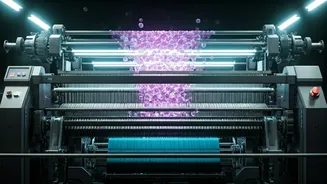
At the heart of Rubi's innovation lies a sophisticated process utilizing specialized enzymes, which co-founder Neeka Mashouf refers to as 'biological machines.' These enzymes are instrumental in chemically converting captured carbon dioxide into cellulose, the fundamental building block of plant fibers. In nature, this conversion is a slow process that occurs as trees absorb atmospheric carbon. Historically, clothing manufacturers have relied on this naturally occurring cellulose, processing it into pulp to create textiles like viscose, rayon, and lyocell. Rubi's system bypasses the need for trees by employing shipping container-sized bioreactors filled with these powerful enzymes. These biological catalysts significantly accelerate the chemical reactions, effectively 'slamming a foot on the accelerator' to expedite cellulose production. This advanced application of enzymes demonstrates a remarkable fusion of biological processes and industrial technology, enabling rapid and efficient material generation.
Partnerships for Progress
While carbon-derived clothing is not yet a mainstream product, its commercial availability is on the horizon. In 2023, a significant partnership was announced with a major retail giant, aiming to evaluate the large-scale application of Rubi's carbon capture technology within its extensive supply chain. This collaboration, followed by similar explorations from other prominent fashion brands, signifies a growing commitment to sustainable practices. These alliances are designed to be mutually beneficial: Rubi can efficiently capture and process carbon dioxide into usable pulp, while large companies gain a clear route towards achieving their carbon neutrality objectives. Such collaborations are crucial for scaling up innovative environmental solutions and integrating them into established industries, paving the way for a more responsible and sustainable future in fashion manufacturing and distribution.
Challenges and Alternatives
Despite the promising advancements, the widespread success of technological solutions for sustainability remains a complex undertaking, often fraught with challenges. Numerous companies have previously attempted and ultimately failed to establish environmentally friendly textile production at scale. A notable example is a Swedish recycling firm that, despite substantial funding and brand support, faced bankruptcy after struggling to consistently meet quality and production demands. Doubts linger regarding the reproducibility of these processes at a commercial level, alongside the ability to meet stringent customer specifications and timelines. Beyond high-tech innovations, a simpler, yet often overlooked, solution to textile waste is reducing overall consumption. The relentless pursuit of new fashion trends fuels fast-fashion brands, prioritizing volume over longevity and perpetuating a cycle of waste. Ultimately, a combination of mindful consumer choices and innovative technological advancements will be essential for effectively addressing textile waste and lowering emissions.