
Budget Overview & Goals
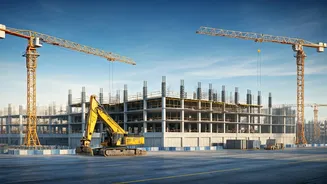
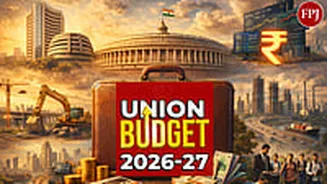
The Union Budget 2026-27 prioritizes broad-based growth and development across multiple sectors. A significant emphasis is placed on infrastructure, with
a commitment to boosting the cement industry and fostering commercial vehicle demand. The budget also underscores the importance of fiscal consolidation, aiming to manage and improve the country's financial health. Additionally, the Viksit Bharat initiative is a focal point, indicating a commitment to long-term development strategies. Key ministries, like the Skill Ministry, saw substantial budget increases, highlighting the government’s focus on human capital development and skill enhancement programs. The budget also showcased initiatives aimed at leveraging technology, with a focus on AI and data centers, aligning with the vision of making India a global tech leader. Further allocations for education, with University Townships and schemes like Mission Mausam also featured prominently, indicating a multi-faceted approach to growth.
Sectoral Impact Analysis
Numerous sectors responded to the Union Budget 2026-27, each with varied perspectives. The cement industry and infrastructure sectors were anticipated to benefit from significant investments. The manufacturing sector received a boost, with specific allocations aimed at promoting growth and efficiency. Simultaneously, the budget included measures such as the rationalisation of employer contributions for PF Trusts and proposals for home loan interest deductions, affecting financial services. The textile sector saw a surge in stock prices due to budget announcements. Furthermore, the logistics industry and FMCG sectors, especially MSMEs, were earmarked for support. The focus on rare earth corridors and the expansion of vet services for the farm sector pointed toward sector-specific growth strategies. The budget's impact extended to the IT sector, with tax overhauls designed to reduce litigation and enhance India’s position as a global hub. Furthermore, the inclusion of allocations for the AYUSH and nutraceutical ecosystem showed an intention to support the healthcare and wellness domains.
Financial & Fiscal Measures
The Union Budget 2026-27 included important financial and fiscal measures. A key aspect was the expectation of ₹3.16 lakh crore in FY27 from the RBI dividend, which is essential for revenue generation. Fiscal consolidation remained a key objective, with the government aiming to manage its finances effectively. The budget proposed an amnesty scheme for foreign assets, aiming at improving transparency and compliance. Tax-related measures also featured prominently. Proposals included IT tax overhauls with the aim of reducing litigation and enhancing the investment climate. There were also adjustments to customs duties, which were designed to promote exports and boost manufacturing. Dividend and MF interest deductions saw specific provisions, while measures like the pan masala cess were expected to generate additional revenue, with an estimated ₹14,000 crore. These actions demonstrated the government’s efforts to ensure financial stability while encouraging economic expansion.
Social Welfare & Health
The Union Budget 2026-27 included substantial allocations for social welfare and healthcare. The budget showcased a commitment to child protection through specific budget allocations for child rights. It also included a strong emphasis on mental health and cancer drug development, reflecting a focus on public health. The budget also allocated ₹1,471 crore for forensic schemes, indicating an emphasis on improving law enforcement capabilities. Furthermore, the budget increased the pollution control budget, revealing the government’s efforts to address environmental concerns. Specific schemes like Mission Mausam received a boost with a ₹1342 crore allocation, indicating a commitment to initiatives related to weather and climate research. This multi-pronged approach underscored the government’s commitment to improving the well-being of its citizens through various social and health-related programs.
Regional Economic Focus
The Union Budget 2026-27 showcased specific initiatives for regional economic growth and development. Ladakh received a budget allocation of ₹4,869 crore, demonstrating support for the region's progress. The budget also highlighted plans to develop cities as development hubs, promoting urban growth and economic activity across different states. Kerala was marked for initiatives like rare earth corridors and projects like the Turtle Trails. Andhra Pradesh's GST collections also saw positive developments in January. The budget also received positive feedback from trade bodies in various states, including MP and Telangana. The focus on MSME support and roadmap for growth, as noted by IOB, showed the budget’s wide-ranging efforts. Gujarat business leaders also welcomed the budget, underscoring its potential to drive regional economic prosperity.
Expert & Industry Views
Industry experts and various stakeholders shared their reactions to the Union Budget 2026-27. Nasscom recognized India’s potential as a global tech leader, acknowledging the budget's tech-focused initiatives. Wipro's CFO highlighted the emphasis on AI and fiscal targets, underscoring the importance of technology and financial management. Sunil Mittal referred to the budget’s focus on growth and inclusion. The ICAI acknowledged the budget’s commitment to stable regulatory environments, essential for business confidence. Amul welcomed the budget, highlighting its potential boost for dairy and cooperatives. However, not all reactions were positive; some critics, such as Chidambaram, felt the budget lacked a concrete economic strategy. Others in CREDAI expressed dissatisfaction with its impact on affordable housing. These diverse views from industry leaders and experts helped to highlight both the strengths and potential challenges of the budget.