
Global Economic Outlook
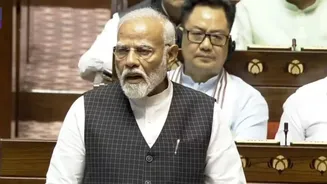
Geeta Gopinath's analysis painted a picture of 2026 as a year of considerable economic instability, emphasizing the necessity for businesses and policymakers
to prepare for shifting economic currents. Several factors contributed to this view. First, she mentioned that the global economic growth outlook has become increasingly complex to predict, due to uncertainties around inflation rates, interest rates, and other macroeconomic indicators. These factors, alongside supply chain problems, could contribute to volatility and make it difficult for businesses to plan and make predictions. Furthermore, Gopinath examined how geopolitical events, like shifts in trade policies and global political tensions, can further complicate the economic environment. These factors have the potential to disrupt markets, making it crucial for businesses to stay adaptive and alert to any possible changes.
AI's Transformative Impact
The rapid advancement of Artificial Intelligence (AI) was another core element of Gopinath's assessment, with her highlighting AI's potential to dramatically transform various aspects of the global economy in 2026. She predicted AI would generate new job markets, while concurrently making some current jobs obsolete. This development creates complex challenges for educational institutions, businesses, and governments alike, demanding that they proactively adopt appropriate policies and skill development programs. Gopinath also touched on the economic valuation of AI-driven companies, emphasizing that their worth is subject to significant volatility due to their quick technological advancement and market adoption rates. She urged investors to proceed carefully and take into account the uncertainty surrounding long-term sustainability.
India's Economic Prospects
Geeta Gopinath’s assessment also provided insights into India's economic growth prospects. She acknowledged the country's potential for robust economic growth but noted that this success isn't guaranteed. This growth will hinge on India's ability to tackle economic and infrastructural issues. She also pointed out that India's policy decisions and reforms would be vital in influencing its economic future. The economist additionally pointed to the rising importance of India's role in global economics, highlighting that the nation is becoming a crucial player in the world. As such, any shifts in India's economic performance would have broader consequences. She said that for the country to truly capitalize on its potential, the government must adopt favorable policies and invest in its infrastructure, providing it the opportunity to become a significant force in the world economy.
Navigating Uncertainties
Gopinath emphasized the need for businesses and policymakers to carefully navigate the forecasted uncertainties of 2026. This entails being adaptive and able to quickly respond to shifting circumstances. Her advice included risk management, which will involve businesses creating contingency plans to cope with economic shocks and unanticipated market changes. Moreover, she stressed the importance of policy makers to put together supportive frameworks, including those addressing issues like the impact of AI, as well as making certain that the labor market is dynamic and strong. Gopinath advised that, by taking these actions, both businesses and governments are better able to handle the complex landscape of 2026 and take full advantage of opportunities that may arise.