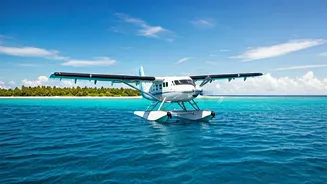








Aviation Takes to Water
India is poised to redefine aerial transportation with the imminent launch of its inaugural commercial seaplane service. This groundbreaking initiative,
spearheaded by SkyHop Aviation after receiving the crucial regulatory go-ahead from the Directorate General of Civil Aviation (DGCA), signifies the nation's first authorized airline for seaplane operations. This development marks a significant step towards enhancing accessibility and tourism in the country's most geographically challenging and visually stunning regions. Previously, India has explored seaplane capabilities, but this venture represents the first systematic and large-scale implementation of a commercial seaplane network, promising a new chapter in inter-island and mainland connectivity.
Lakshadweep: The Gateway
The beautiful Lakshadweep islands have been chosen as the starting point for this ambitious seaplane project. The service plans to establish vital links between multiple islands within the archipelago and connect them directly to the Indian mainland. Specifically, the initial phase aims to integrate at least five islands, dramatically improving how people can reach and travel across this remote island chain. This strategic choice is driven by the unique geographical characteristics of Lakshadweep, where traditional airport construction is often impractical, making seaplanes a perfect fit for the environment and the need for improved connectivity.
Why Seaplanes Excel
Seaplanes possess a distinct advantage over conventional aircraft due to their ability to take off and land on water surfaces. This inherent capability bypasses the need for extensive and costly airport infrastructure, such as long runways. Consequently, they are exceptionally well-suited for archipelagos like Lakshadweep, where developing traditional airports presents significant logistical and environmental challenges. The introduction of seaplanes is anticipated to drastically reduce travel durations between islands and mainland cities, provide a substantial impetus to tourism in coastal and island locales, and crucially, enhance connectivity to regions that are currently underserved or difficult to access through existing transportation networks.
The Passenger Experience
Travelers can anticipate a unique and intimate journey aboard the seaplanes. Operations are expected to commence with aircraft designed to accommodate 19 passengers, focusing on short regional routes. This smaller capacity is intended to offer a more personal travel experience, allowing passengers to soak in the breathtaking scenic views from a unique vantage point as they glide over the water. The emphasis is on providing a comfortable, efficient, and visually rewarding way to traverse the distances between islands and connect to the mainland, transforming the perception of travel in these beautiful, water-bound destinations.
Future Horizons Ahead
The successful implementation of this commercial seaplane network in Lakshadweep could pave the way for its expansion to other regions across India. The plan envisions replicating this model in other coastal states, along major river systems, and at various popular tourism hubs nationwide. This scalable approach, building on previous experimental uses of seaplanes, aims to create a structured and integrated network that leverages the unique capabilities of water-based aircraft. If this initial phase proves successful, it could fundamentally alter regional transportation, unlock new economic opportunities, and make previously inaccessible natural wonders more reachable for both domestic and international visitors.