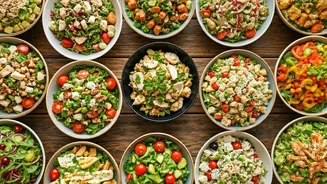








Salad Essentials Unveiled
Creating a delicious salad starts with understanding the basic components. First, there's the base – think crisp lettuce varieties like romaine, iceberg,
or butter lettuce. Next, add a colorful array of vegetables. Tomatoes, cucumbers, bell peppers, and carrots are common additions, providing both flavor and texture. Protein adds substance to the salad. You could incorporate grilled chicken, hard-boiled eggs, chickpeas, or paneer to make the salad more filling. Don't underestimate the power of healthy fats such as avocado or a drizzle of olive oil. Finally, the dressing is crucial for tying all these components together. The dressing can be as simple as a vinaigrette, or as complex as a creamy ranch. Consider fresh herbs like parsley or cilantro. Experiment with different combinations to discover your favorites.
Classic Salad Delights
Begin with beloved classics. The Caesar salad is a timeless choice, typically featuring romaine lettuce, croutons, parmesan cheese, and a creamy Caesar dressing. Then, there's the Greek salad, which balances fresh flavors. This salad often includes tomatoes, cucumbers, red onion, olives, and feta cheese, all tossed in a zesty vinaigrette. Another is the simple yet satisfying Caprese salad. It highlights fresh mozzarella cheese, ripe tomatoes, and fragrant basil leaves, drizzled with balsamic glaze. These foundational recipes can be modified. For instance, you could add grilled chicken to your Caesar salad for a protein boost, or add some avocado slices to your Greek salad for creaminess. Each classic offers a starting point, inviting you to personalize it.
Vibrant Vegetarian Salads
Vegetarian salads are naturally packed with nutrients and vibrant flavors. Consider a hearty Quinoa salad. It is filled with cooked quinoa, mixed vegetables, and a light lemon vinaigrette. This salad is both filling and nourishing. A black bean and corn salad presents a vibrant mix of flavors and textures, with black beans, sweet corn, red bell pepper, and cilantro. A creamy avocado dressing beautifully complements it. For something with a bit of spice, try a spicy cucumber and peanut salad, inspired by Asian cuisines. It blends cucumber, peanuts, and a chili-lime dressing. Don't hesitate to experiment with different types of beans, grains, and dressings to make each vegetarian salad unique and delicious. This can give the salads a unique dimension.
Salads with a Twist
Elevate your salad game with innovative ingredients and unexpected combinations. Try incorporating fruits such as mangoes, strawberries, or oranges for a touch of sweetness and freshness. A spinach salad with berries, goat cheese, and a balsamic vinaigrette offers a balance of sweet and tangy flavors. Explore different grains, such as farro or couscous, to create textural interest in your salads. Combine roasted vegetables like sweet potatoes, beets, and Brussels sprouts with toasted nuts and seeds. These additions enhance both the taste and nutritional value of your meal. The possibilities are endless; consider adding various toppings, and try a variety of dressings.
Light & Healthy Options
If you're looking for lighter fare, these salads can be your go-to options. A simple green salad with mixed greens, a few cherry tomatoes, and a light vinaigrette makes for a quick and refreshing choice. Alternatively, create a tuna salad with a light mayonnaise, celery, and onions, served over a bed of greens. Adding a grilled chicken salad with a low-fat dressing is another good option. To reduce the calories, consider using lighter dressings. A simple lemon vinaigrette or a light yogurt-based dressing can enhance the flavors without adding excessive fats. Focusing on fresh, raw vegetables and lean protein sources can greatly contribute to a light and satisfying meal.
Mastering Salad Dressings
A flavorful dressing can transform a simple salad into something special. Begin with a classic vinaigrette – a combination of olive oil, vinegar, and seasonings. Experiment with different types of vinegar, such as balsamic, red wine, or apple cider vinegar. Add Dijon mustard for emulsification and a touch of tang. For creamy dressings, combine Greek yogurt or avocado with herbs and spices. Create a ranch dressing by mixing mayonnaise, buttermilk, and a blend of herbs. Always taste and adjust your dressing to achieve the desired balance of flavors. Fresh herbs, such as basil, dill, and parsley, can add depth. Keep dressings on the side for guests to customize the amount. Mastering the basics will help you to create countless flavor combinations.
Tips for Salad Success
To create the perfect salad, consider these helpful tips. Wash and dry your greens thoroughly to remove excess water. This prevents the salad from becoming soggy. Prepare your ingredients in advance. Chop vegetables and make the dressing before assembling the salad. This can help with efficiency. Add the dressing right before serving. This will preserve the texture of your salad. Use fresh, high-quality ingredients. The better the ingredients, the better the flavor. Don't be afraid to experiment with different combinations of ingredients and dressings. Finally, add the protein last, so it doesn't get soggy. These simple steps can make your salad-making experience a success.
Serving and Presentation
The way you present your salad can elevate the dining experience. Consider using a large, attractive bowl to serve a family-style salad. Arrange the ingredients artfully. Place the greens at the bottom and arrange the other components in an appealing manner. Use colorful vegetables, and arrange them to create visual interest. Garnish the salad with fresh herbs or a sprinkle of toasted nuts. For individual servings, use elegant salad plates, and portion the salad neatly. Don't overload the plate; a well-proportioned salad looks more appetizing. A well-presented salad not only tastes better but also enhances the overall dining experience.
Seasonal Salad Inspirations
Embrace seasonal ingredients to create fresh and flavorful salads throughout the year. In the spring, take advantage of asparagus, peas, and radishes in your salads. In the summer, enjoy ripe tomatoes, cucumbers, and fresh berries. Autumn brings the abundance of root vegetables, such as sweet potatoes, squash, and apples. Winter calls for hearty greens like kale and spinach. Consider the flavors of each season. Create salads with ingredients that are in their peak season. This ensures the best taste and nutrition. Regularly switching up your salad ingredients will keep things interesting and make the most of nature's bounty.
Beyond the Basics
Once you have the basics down, explore beyond the typical salad. Try using different types of greens, from the peppery arugula to the slightly bitter endive. Add a variety of grains like quinoa, farro, or couscous for a boost of nutrients and texture. Incorporate different types of proteins, such as grilled tofu, tempeh, or edamame. Don't be afraid to experiment with unusual ingredients. Add roasted fruits such as peaches or pears, or try adding a few unexpected toppings, such as pomegranate seeds or candied nuts. The goal is to personalize each salad to your own taste preferences. Don't hesitate to break the rules; your taste buds will thank you.
Salad FAQs Answered
Got questions about salads? Here are some frequently asked questions. How do I keep salads fresh? Store the lettuce separately from other ingredients. Wash and dry the greens thoroughly before storing. What are some good dressing alternatives? Try using a simple vinaigrette, a yogurt-based dressing, or even a squeeze of lemon juice with olive oil. How can I make my salad more filling? Add protein, such as grilled chicken or chickpeas, and include grains, like quinoa or farro. Can I prepare salads in advance? Yes, but add the dressing right before serving to prevent sogginess. Answering these common questions can help solve many issues.
Salad Meal Planning
Incorporate salads into your weekly meal plan for healthy eating. Plan your meals ahead by deciding on the salads you'll make for the week. Make a grocery list based on those recipes. Prep your ingredients in advance, such as washing and chopping vegetables. This will save time later in the week. Prepare the salad dressings ahead of time to make assembling the salads easier. For lunch, pack salads in individual containers with the dressing on the side. For dinner, pair salads with grilled meats, roasted vegetables, or whole grains. Consistent meal planning helps you eat healthier and manage your busy schedule. Planning will make it easier to add healthy meals to your daily routine.
Salad Dressing Hacks
Make your own dressings with these handy hacks. To make a simple vinaigrette, use a 3:1 ratio of olive oil to vinegar. For creamier dressings, add Greek yogurt, avocado, or tahini. Add herbs and spices to customize the flavors of the dressing. To save time, make a larger batch of dressing and store it in the refrigerator. Use an immersion blender or a whisk to emulsify the ingredients. Taste the dressing as you go, and adjust the seasonings to your liking. Label and date the dressings for easy identification. Knowing these hacks can greatly simplify your meal preparation. These hacks will lead to great tasting meals.
Salads for Dietary Needs
Salads are easily adaptable to suit a variety of dietary requirements. For vegans, use plant-based protein sources, such as chickpeas, tofu, or lentils, and ensure the dressing is vegan. For gluten-free diets, avoid croutons and use gluten-free grains or vegetables. For those watching their sodium intake, limit the use of salt and choose low-sodium ingredients. If you have nut allergies, avoid using nuts and choose seeds or other alternatives. Always read the ingredient lists to be sure of the ingredients. Tailoring the salads to your needs will let you enjoy delicious and healthy meals without the worry of allergies.
The Future of Salads
As culinary trends evolve, so does the world of salads. Expect to see more creative flavor combinations, utilizing global ingredients. The use of innovative greens, such as microgreens and edible flowers, will become more common. People are also seeking out organic, locally sourced ingredients. The emphasis on sustainability and eco-friendly eating will continue to shape the evolution of salads. Expect to see new ingredients. These trends reflect a growing appreciation for healthy, delicious, and environmentally responsible eating habits. Salads will continually surprise us with new flavors and options.