



Sabudana Soaking Savvy
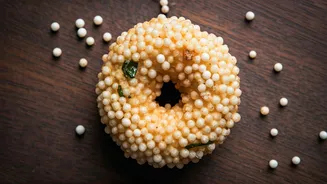
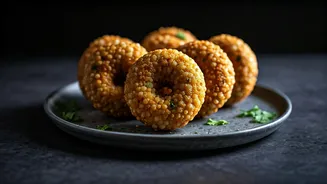
The foundation of a great sabudana vada lies in the precise soaking of the sago pearls. Over-soaking transforms them into a mushy mass that greedily soaks
up oil, leading to greasy vadas. Conversely, insufficient soaking results in a chewy texture and poor binding, causing the vadas to fall apart. The ideal state for sabudana pearls is when they are tender enough to be pressed and yield, yet still maintain their distinct, individual shape. Achieving this balance is crucial for both texture and oil absorption, setting the stage for crispiness rather than sogginess.
Mastering Water Drainage
Even with perfectly soaked sabudana, excess residual water can spell disaster for your vadas. This lingering moisture within the mixture is a primary culprit behind vadas disintegrating during the frying process. It's imperative to thoroughly strain all the water from the soaked sabudana and allow the pearls to rest for a short period. This resting phase facilitates the evaporation of surface moisture, ensuring the mixture has a firmer consistency that will hold its shape and fry evenly. Proper drainage is a small step with a significant impact on the final structure and crispiness.
The Potato Binding Balance
Potatoes play a pivotal role as the binding agent in sabudana vadas, but their quantity is a delicate act. Using an excessive amount of mashed potato can render the vadas dense and heavy, detracting from their desirable lightness. On the other hand, too little potato will compromise the structural integrity, leading to vadas that crumble easily. The perfect mixture should feel soft and pliable to the touch, yet possess enough stability to retain its form when gently pressed, striking a harmonious balance between softness and cohesion.
Peanut Preparation Precision
The inclusion of peanuts contributes a delightful crunch and flavor to sabudana vadas, but only when prepared correctly. Roasting the peanuts before incorporation is non-negotiable; it deepens their flavor profile and crucially removes excess moisture, which aids in achieving a crispier final product. Furthermore, the texture of the crushed peanuts matters significantly. They should be coarsely ground to provide noticeable textural elements without becoming a fine powder that might lead to uneven cooking or potential cracking during frying. Proper peanut preparation enhances both taste and texture.
Frying Temperature Control
The temperature of the frying oil is a critical variable that directly influences the outcome of your sabudana vadas. Frying in oil that is too hot will result in the exterior rapidly browning to a burnt crisp while the interior remains stubbornly uncooked and doughy. Conversely, oil that is not sufficiently hot will cause the vadas to absorb an excessive amount of oil, rendering them greasy and limp rather than crispy. The ideal scenario involves moderately hot oil, allowing the vadas to cook through gently and evenly, developing a golden-brown, crispy exterior while maintaining a soft, yielding center.
Gentle Dough Mixing
Overworking the sabudana vada mixture can inadvertently lead to undesirable textures. Vigorous and prolonged mixing can break down the delicate sabudana pearls, transforming them into a sticky, pasty consistency. This excessive manipulation results in vadas that lose their airy lightness and can become heavy and dense once fried. It is essential to combine all the ingredients with a gentle hand, ensuring the sabudana pearls remain as intact as possible, which helps maintain a light and fluffy texture in the final product.
Uniform Vada Shaping
Consistency in the size and thickness of your shaped sabudana vadas is vital for even cooking. When vadas vary significantly in dimension, some will cook much faster than others. Smaller ones may burn before larger ones are properly cooked through. To ensure uniform crispness and texture throughout, flatten the vadas slightly and strive to make them all approximately the same size and thickness. This uniformity allows them to cook at a consistent pace, guaranteeing a perfectly crispy result across the board.
The Resting Period Advantage
Do not underestimate the benefit of a short resting period for your shaped sabudana vadas before they hit the hot oil. Allowing the formed vadas to sit for a few minutes helps them firm up and set. This crucial step acts as a stabilizer, significantly reducing the risk of them breaking apart during the frying process. It ensures the mixture holds together more effectively, contributing to a better final texture and overall structural integrity. Even a brief rest can make a notable difference in how well your vadas hold their shape.