




Lemon & Salt Power
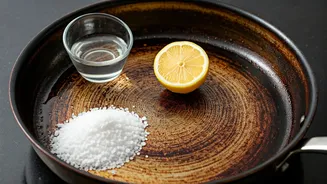
When your pans have lighter burn marks, a simple yet effective solution lies in combining lemon and salt. This dynamic duo works by leveraging the natural
acidity of lemon juice, which helps to break down grime and residue, while the granular texture of salt acts as a gentle abrasive. To implement this method, simply sprinkle a generous amount of salt over the affected area of the pan, then cut a lemon in half and use the cut side to rub directly onto the salt-covered surface. The friction created by rubbing, combined with the chemical action of the lemon and salt, will effectively lift away the burnt-on food. Beyond its cleaning prowess, this technique also serves a dual purpose by neutralizing any unpleasant odors that might have accumulated in the pan, leaving it smelling fresh and looking noticeably brighter after the treatment.
Vinegar's Acidic Touch
For more persistent burn stains, white vinegar emerges as a powerful ally. This common pantry staple is known for its acidic properties, which are remarkably effective at dissolving the hardened, burnt layer that clings to cookware. To utilize vinegar for cleaning, pour a small amount directly into the burnt pan, enough to cover the affected bottom. Allow it to sit and work its magic for approximately 15 to 20 minutes. For an extra boost in its stain-fighting capabilities, you can gently warm the vinegar in the pan, which can accelerate the process of breaking down the burnt residue. Once the vinegar has had time to soak, the burnt layer will become significantly loosened, making it much easier to scrub away with minimal physical effort. Its inherent cleaning qualities make it a reliable and budget-friendly home remedy for restoring cookware.
Gentle Hot Water Soak
Sometimes, the severity of the burn doesn't require intense measures. For minor instances of burnt food or grease build-up, a straightforward approach involving hot water and dishwashing liquid can often suffice. Begin by filling the affected pan with hot water, letting it soak for a considerable period to soften any attached residue. After the soaking phase, introduce a standard amount of dish soap to the water. With a gentle scrubbing motion, work the soap and water over the surface to dislodge any remaining grease or light burnt bits. This method is particularly advantageous as it is highly effective for removing common kitchen greases and light food debris without posing any risk of damaging or scratching the pan's surface, preserving its integrity.
Baking Soda & Combo Power
When faced with truly stubborn stains that resist single-ingredient treatments, a powerful combination of everyday kitchen staples can be your best bet. Ingredients like baking soda, lemon, salt, and vinegar, when used together strategically, can tackle even the most formidable burnt-on messes. For specific cookware materials, such as cast iron, alternative natural acids can also be quite effective. Heating a small quantity of tomato pulp or tamarind paste in the pan can help loosen the burnt layer, thanks to their inherent acidic nature. These multifaceted approaches provide a thorough clean, ensuring your cookware is restored to a fresh, appealing condition without resorting to harsh chemicals that could harm the pan's finish. Ultimately, the most effective solutions often reside right within your own kitchen pantry.