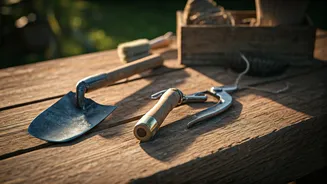







Wash Away Contaminants
The first step to ensuring your gardening implements serve you well year after year is to meticulously remove all soil and organic debris. Begin by using
a strong stream from your garden hose to dislodge loose dirt. For any stubborn mud or caked-on grime, a putty knife or a plastic scraper is your best bet for gently lifting it away without scratching the tool's surface. Following this initial physical removal, submerge each tool in a solution of hot water and a small amount of dish soap. Allow them to soak for approximately 15 to 20 minutes; this soaking period helps to loosen any remaining residue. After the soak, a thorough rinse with cool water is crucial, followed by immediate and complete drying with a soft, absorbent cloth, such as microfiber, to prevent the onset of rust.
Tackle Rust and Sap
Once your tools are clean and dry, it's time to address any imperfections like rust or sticky sap, which can impair their function and appearance. Examine each metal part for any signs of corrosion. If you find rust or pitting, employ a stiff wire brush or steel wool to vigorously scrub the affected areas. Applying a light coating of vegetable oil to the rusted spots before scrubbing can help loosen the rust, making it easier to remove. For sticky residue, often caused by plant sap or insect excretions, dip an old cloth into a solvent like turpentine, lighter fluid, or a commercial product like Goo Gone. Carefully wipe down the tool, paying particular attention to any joints or moving parts where the stickiness might accumulate and impede movement.
Disinfect for Health
To safeguard your plants from the transmission of diseases, fungi, and bacteria, disinfecting your garden tools after cleaning is an indispensable practice. Prepare a disinfecting solution by mixing two cups of chlorine bleach with one gallon of water in a sturdy bucket. Submerge your clean and dry tools into this solution, ensuring all parts are fully immersed, and let them soak for about 10 minutes. This duration is sufficient to effectively neutralize most common pathogens. After the soaking period, rinse each tool thoroughly with clean water to remove any bleach residue. Finally, dry the tools completely once more with an old cloth to prevent any remaining moisture from causing rust or other damage, ensuring they are ready for storage or immediate use.
Strategic Storage Solutions
Proper storage is paramount for maintaining the condition and longevity of your gardening implements, preventing issues like rust and warping. After cleaning and disinfecting, ensure tools are returned to a dry storage area, rather than being left outdoors. For smaller hand tools like trowels and cultivators, a highly effective method to prevent rust and keep them easily accessible is to fill a large container, such as a flower pot or bucket, with sand and mix in about one cup of vegetable oil. Inserting the metal ends of these tools into this oiled sand mixture creates a protective barrier. Larger tools should ideally be hung on hooks or a pegboard. This prevents their handles from warping due to humidity or pressure and keeps the metal components off potentially damp floors.
Revitalize Wooden Handles
Tools with wooden handles require specific care to prevent them from drying out, cracking, or becoming loose from the metal parts. This degradation can compromise the tool's structural integrity and usability. To combat this, aim to sand the wooden handles once or twice a year using medium-grit sandpaper. This process removes rough patches and prepares the wood for a protective treatment. Afterward, rub the handles generously with linseed oil. This oil penetrates the wood, creating a protective layer that repels moisture and helps maintain the wood's suppleness. In cases where a handle is severely damaged, it can often be replaced by carefully removing the metal component and fitting a new wooden handle.
Maintain Moving Parts
For tools equipped with moving components, such as pruning shears, snips, or loppers, regular lubrication is essential for smooth operation and preventing stiffness or seizure. Apply a drop or two of machine oil directly onto the hinge points and any other moving parts. This simple application ensures that the blades or cutting mechanisms glide freely. For a more thorough maintenance routine, consider disassembling these tools annually. Once apart, rub all the individual components, including screws and bolts, with machine oil. This deep clean and oiling process helps to remove any unseen rust or mineral deposits that might have accumulated, ensuring the tool performs optimally when you need it most.
Sharpen Edges Keenly
Any gardening tool featuring a blade or an edge, including shovels, hoes, pruners, and snips, will benefit significantly from periodic sharpening to maintain peak performance. For larger blades, a 10-inch flat mill file is an effective tool. For smaller, more delicate edges, a whetstone is recommended. Before you begin sharpening, wipe down the blades with WD-40; this can help dislodge any debris and facilitate the sharpening process. When filing or honing, maintain a consistent angle, typically between 20 and 45 degrees, following the original bevel of the blade. After sharpening, meticulously wipe down the edges with a soft cloth to remove any metal shavings, ensuring a clean and safe finish.